When Art Makes the First Move

Cultural Marketing, Brand Semiotics, Urban Strategy, Consumer Engagement, Digital Out-Of-Home

When Art Makes the First Move

Amsterdam's Streets as Cultural Stage

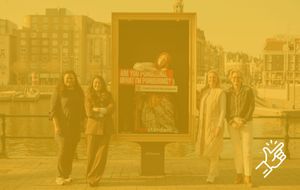
"Catch Me at the Museum" is a cultural marketing campaign developed on behalf of the Municipality of Amsterdam by Monks, JCDecaux, and amsterdam&partners. Ten Amsterdam museums contributed iconic artworks to be displayed on billboards, digital screens, and interactive installations across the city. Special activations included living statues performed by actors indistinguishable from original artworks, and telephone installations where passers-by could hear painted characters inviting them to visit. Rather than importing new audiences, the campaign targeted people already present in the city but bypassing its cultural institutions.

The initiative holds broader significance as a model for urban cultural policy in an era of overtourism and attention scarcity. By reversing the traditional relationship between audience and institution, it reframes the museum not as a passive container but as an active participant in urban life, demonstrating how cities can redistribute cultural capital across public space without diluting institutional authority.

The campaign operates through a sophisticated inversion of established semiotic hierarchies. The museum artwork, traditionally coded as sacred and spatially bounded, is deliberately placed into the profane commercial infrastructure of out-of-home advertising. This transgression generates productive tension: the artwork retains its cultural aura while acquiring the directness of street-level address. The strategy draws on principles central to consumer culture theory, where value is co-produced through contextual encounter rather than embedded in the object alone. The living statue activations intensify this logic by collapsing the distinction between representation and embodied presence, creating what might be understood as a ritual interaction that momentarily sacralizes commercial space. The postcode-targeted digital placements further reveal an algorithmic curation logic, positioning art consumption as locationally contingent rather than intentionally sought. This reframes cultural engagement from deliberate pilgrimage to ambient encounter, a shift with profound implications for how institutions conceptualize their publics.

Practical Implications for Organizations

  • Invert the customer journey: rather than driving audiences toward your offering, deploy the offering where audiences already circulate.
  • Leverage existing urban infrastructure creatively; commercial media formats can carry cultural or brand narratives without sacrificing sophistication.
  • Use geotargeted placement to create contextually relevant encounters that feel serendipitous rather than intrusive.
  • Collaborate across institutional boundaries; the coalition of ten museums amplified collective impact beyond what any single institution could achieve.
  • Design for embodied interaction, not just visual exposure; physical and sensory activations deepen engagement and memorability.

Consumer tribes that may relate to this Eureka:

Space Sophisticates
Consumer Tribe: Space Sophisticates
Super Advertisers
Consumer Tribe: Super Advertisers
Great! Next, complete checkout for full access to Antropomedia Express: Consumer Tribes.
Welcome back! You've successfully signed in.
You've successfully subscribed to Antropomedia Express: Consumer Tribes.
Success! Your account is fully activated, you now have access to all content.
Success! Your billing info has been updated.
Your billing was not updated.