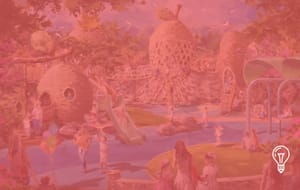
Disney Magic, Public Space, and Post-Wildfire Renewal
The case concerns The Walt Disney Company’s pledge of USD 5 million to rebuild Charles White Park in Altadena, California, a public space devastated by wildfire. As part of a broader USD 15 million regional relief commitment, Disney is not only funding reconstruction but also mobilizing Walt Disney Imagineering to co-design the site with Los Angeles County officials. The project includes a new community center and an upgraded playground drawing on Disney’s narrative and design capabilities, with an opening planned to mark a symbolic threshold from destruction to renewal for residents and affected Disney employees.
Beyond philanthropy, this initiative exemplifies how global entertainment brands embed themselves in local ecologies of care, resilience, and place-making. It illuminates the convergence of corporate social responsibility, branded environments, and community trauma recovery. The park becomes a hybrid object: simultaneously civic infrastructure, memorial to loss, and branded experiential space. As such, it offers a critical lens on how corporations shape the meanings of “home,” “community,” and “healing” in an era of climate-induced disasters and urban precarity.
The reconstruction can be read as a form of “experiential citizenship,” where belonging and collective memory are mediated through a designed environment authored by a corporation. Imagineering’s role positions Disney as both storyteller and spatial planner, translating its aesthetics of “magic” into a post-disaster landscape. This reconfigures the park as a semiotic bridge between everyday life and fantasy, potentially deepening community attachment while subtly normalizing corporate presence in public space governance. The project also exemplifies “disaster capitalism’s” softer register: rather than extracting value through privatization, the brand accrues symbolic capital—trust, affection, moral legitimacy—by visibly investing in shared spaces. At the same time, the risk of “philanthro-branding” emerges, where communal grief and resilience become stages for corporate narrative, potentially overshadowing local histories, non-branded forms of remembrance, and alternative futures residents might envision for the park. The case thus invites attention to power asymmetries in co-creation processes: whose imaginaries of safety, play, and nature prevail, which cultural references anchor the design, and how the rebuilt park will encode class, race, and access through its aesthetics, rules, and programming.
Practical Implications for Organizations
- Treat post-crisis giving as long-term place-making: co-design public spaces with residents, not just officials, to foster authentic ownership.
- Use design capabilities to support community narratives rather than to center brand mythology; make local history and memory visible in the built environment.
- Establish transparent governance for co-branded public spaces, clarifying maintenance, programming, and decision rights over time.
- Integrate climate resilience into every philanthropic build: shade, water management, fire-adapted landscaping, and emergency-use infrastructure.
- Measure impact in psychosocial as well as financial terms, tracking indicators such as perceived safety, attachment to place, and cross-group interaction.
- Communicate modestly: foreground community voices and local partners in storytelling to avoid perceptions of exploitative “disaster marketing.”
Consumer tribes that may relate to this case study: