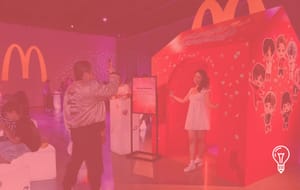
McDonald’s, TinyTAN, and the Algorithmic Mainstreaming of K-pop Fandom
McDonald’s recent activation around the BTS-inspired TinyTAN Happy Meal illustrates how a global fast-food chain strategically entangles itself with an already-robust fan culture. Developed with IW Group, the campaign used experiential installations, social media assets, and limited-edition collectibles to mobilize K-pop fandom logics—queueing, photo-taking, unboxing, trading, and sharing—within the branded servicescape. Rather than treating K-pop merely as a soundtrack or visual garnish, McDonald’s foregrounded TinyTAN as the narrative driver of the promotion, making the restaurant a temporary node in K-pop’s transnational networked culture and generating measurable lifts in sales and social engagement.
Beyond immediate revenue gains, the case signals a broader shift in how brands appropriate and scale “niche” cultural practices into mass-market spectacles. K-pop fandoms are highly organized, data-literate, and platform-savvy; by partnering with this infrastructure rather than ignoring it, McDonald’s converted practices like streaming parties and fan-made content into drivers of foot traffic and algorithmic visibility. This demonstrates how fandom itself has become a key resource in cultural branding, as companies draw on affective labor, identity performance, and peer-to-peer circulation to refresh mainstream categories such as quick-service dining.
The campaign operates as a form of cultural intermediation, translating the dense semiotics of K-pop—cute avatars, serialized storytelling, choreographed collectivity—into fast-food rituals and objects. In consumer culture terms, it fuses brand community and fan community, blurring whether participants are primarily BTS ARMY, McDonald’s loyalists, or both. The activation leverages tribal dynamics (shared passion, insider references, temporal intensity) while maintaining the centralized control characteristic of brand communities through curated spaces, timed drops, and controlled scarcity.
Digitally, the case illustrates how platforms’ recommender systems reward highly shareable, visually distinctive, and emotionally charged content. By encouraging photo moments and unboxing behaviors, McDonald’s piggybacks on algorithmic logics that surface repetitive, aestheticized posts. This co-opts fan practices as unpaid promotional labor, raising questions about exploitation, authenticity, and cultural ownership, but it also shows how brands can reposition themselves as facilitators of participatory joy rather than top-down advertisers.
Practical Implications for Organizations
- Treat fandoms as sophisticated cultural partners, not just “audiences”; co-design activations that respect their norms, humor, and representational sensitivities.
- Build campaigns around fan practices (collecting, remixing, documenting, line culture) and architect servicescapes and packaging that are inherently “postable.”
- Use limited-edition collaborations to create temporal intensity, but ensure operational readiness for surges in demand, secondary markets, and potential backlash.
- Develop measurement frameworks that integrate sales with fan metrics such as UGC volume, hashtag spread, and community sentiment across platforms.
- Establish internal roles or external partners fluent in specific subcultures to mediate between brand risk protocols and the improvisational nature of fan cultures.
- Anticipate ethical scrutiny around cultural appropriation and labor; communicate transparently about the partnership, its benefits, and the value returned to fan communities.
Consumer tribes that may relate to this case study: