Lunar Play: Snapchat, Xbox, and the Gamification of the Night Sky
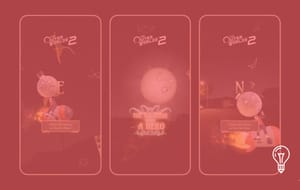
For the launch of The Outer Worlds 2, Snapchat and Xbox co-created what they describe as the first augmented reality Lens able to “scan the moon.” Using celestial tracking, the experience detects the moon’s position in the night sky and overlays an animated “Moon Man” character tied to the game’s narrative universe. Fans access the Lens through Snapchat, point their smartphone at the night sky, and watch the moon transform into a branded, responsive character whose movements and dialogue are synchronized with the player’s perspective. The activation extends across markets where the game launches, leveraging existing Snapchat usage patterns rather than requiring a separate app.
Beyond its technical novelty, the campaign is significant as a public, planetary-scale branding gesture. Rather than keeping the game world confined to screens, the collaboration symbolically annexes a shared celestial object as a surface for storytelling and promotion. The moon is reframed as an interactive billboard but also as an actor in a playful, co-created mythology between fans, platform, and publisher. This move exemplifies how entertainment brands increasingly seek to colonize everyday environments—streets, homes, skies—through location-aware, algorithmically mediated overlays that turn infrastructure and nature into channels of engagement.
The Lens functions as a powerful example of how platforms deploy computer vision, geolocation, and real-time tracking to re-author urban and cosmic space. It enacts what can be read as infrastructural semiotics: the moon becomes a sign dense with narrative promise, technical prowess, and corporate partnership. Users’ embodied gestures—lifting the phone, aligning it with the moon—fold into a ritual of participation that fuses fan labor, data extraction, and affective attachment to both Snapchat and Xbox. The case also illustrates techno-animism, as a distant celestial body is endowed with personality and agency, inviting parasocial intimacy with a branded character literally written onto the sky. This blurring of the game world and “outer world” exemplifies contemporary consumer culture, where immersion is achieved less by escape from reality than by its algorithmic augmentation. It further demonstrates how platforms function as co-governors of attention, deciding which parts of the environment are rendered visible, playful, and monetizable through proprietary lenses and tracking systems.
Practical Implications for Organizations
- Use spatial computing to transform natural and urban landmarks into narrative touchpoints, extending IP into lived environments.
- Partner with dominant social platforms instead of building standalone apps to leverage existing behaviors and network effects.
- Treat AR not just as a spectacle but as a ritual: design repeatable, embodied interactions that reward users for returning under different conditions (weather, time, location).
- Frame technical innovation (e.g., celestial tracking) as part of the brand story, signaling cultural leadership rather than mere advertising.
- Anticipate ethical and public-perception issues when appropriating shared spaces (sky, monuments) as branded canvases, and communicate boundaries clearly.
- Integrate AR analytics into broader measurement frameworks to understand how environmental interactions correlate with conversion, fandom, and long-term brand equity.
Consumer tribes that may relate to this case study: