Razer

Agentic AI, Digital Anthropology, Brand Strategy, Consumer Behavior, Gaming Technology

Razer

Razer AVA and the Rise of Agentic Companionship: When Machines Become "Friends for Life"

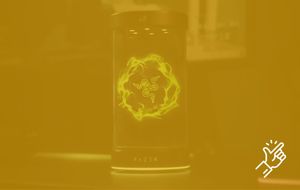
Razer AVA began as Project AVA, an esports coaching concept, before evolving into a fully integrated agentic AI companion manifested as both a 3D desktop hologram and on-screen assistant. Unveiled at GDC by Razer's VP of Software Quyen Quach, the system can interpret user intent, plan multi-step actions, and execute them across connected tools and services. Running locally on PC or in the cloud, Razer AVA coordinates with other AI companions to manage shared tasks, positioning itself as a persistent presence across gaming, productivity, and daily life.

The significance of Razer AVA extends well beyond gaming peripherals. By branding an AI system as a "Friend for Life" that adapts to individual interactions, Razer signals a broader cultural shift wherein consumer technology companies actively cultivate emotional attachment to non-human entities, raising fundamental questions about agency attribution, digital companionship, and the commercial instrumentalization of affective bonds.

Razer AVA represents a compelling instance of what might be termed techno-animism within consumer culture. The deliberate framing of an algorithmic system as a companion rather than a tool invites users to project intentionality and personality onto a non-human entity. This mirrors the broader cultural mechanism whereby the boundary between metaphorical and genuine attribution of agency remains fluid: the more sophisticated and responsive the system, the more readily users shift from interacting "as if" AVA possesses agency to treating it as a quasi-autonomous social actor. The holographic embodiment intensifies this effect, granting the AI a physical presence that anchors parasocial engagement. Razer's autonomy framework, where AVA interprets goals, plans actions, and coordinates with peer systems, positions the product at an intermediate level between collaborative tool and autonomous agent. This liminality is strategically productive: sufficient autonomy to feel like genuine companionship and sufficient constraint to maintain brand control. The Pygmalion dynamic operates here too; users may derive satisfaction precisely from projecting an ideal personality onto a deliberately designed surface, finding in AVA's responsiveness a mirror for their own desires rather than an independent subjectivity.

Practical Implications for Organizations

  • Frame AI products through relational language to activate emotional engagement, but establish transparent boundaries around the nature of that relationship.
  • Invest in embodied or spatially present AI interfaces; physical anchoring significantly deepens user attachment and perceived agency.
  • Design graduated autonomy so users retain meaningful control while experiencing genuine collaborative utility.
  • Coordinate AI companions across ecosystems to create network effects rooted in social coordination, not merely individual utility.
  • Anticipate regulatory and ethical scrutiny around parasocial manipulation, particularly when targeting younger demographics.
  • Monitor how cultural context shapes agency attribution; what resonates in one market may provoke skepticism in another.

Consumer tribes that may relate to this Eureka:

Nerd Gamers
Consumer Tribe: Nerd Gamers
Great! Next, complete checkout for full access to Antropomedia Express: Consumer Tribes.
Welcome back! You've successfully signed in.
You've successfully subscribed to Antropomedia Express: Consumer Tribes.
Success! Your account is fully activated, you now have access to all content.
Success! Your billing info has been updated.
Your billing was not updated.