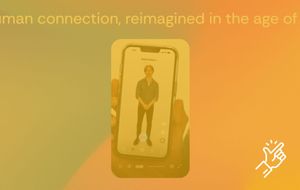
2wai and the Rise of Everyday Digital Twins
2wai is an AI avatar platform that enables consumers to create “digital twins” of themselves, called HoloAvatars, in a few minutes using only a phone camera. The service translates a brief capture sequence into a photorealistic, talking avatar that can mirror the user’s appearance and conversational style. Distributed through a mainstream app ecosystem and promoted as free to start, 2wai lowers the technical and economic barriers that previously confined high-fidelity avatars to gaming, VFX, and enterprise digital-twin applications. The company also positions these avatars within a broader ecosystem of AI “icons” and “legends,” turning the app into a hub where users can interact with both self-representations and aspirational others.
Beyond technical convenience, 2wai exemplifies a cultural shift in how individuals imagine identity, presence, and social interaction in AI-mediated environments. By normalizing the rapid creation of personalized, semi-autonomous agents, the platform moves digital twins from industrial infrastructure and smart-city dashboards into everyday affective life: friendship, fandom, memory, and self-presentation. The case marks a significant moment in the domestication of AI, where algorithmic agents become intimate companions rather than distant systems, and where the line between human subject, branded persona, and datafied proxy becomes increasingly porous.
Fundamentally, 2wai operationalizes a form of “consumer digital twinning” in which the self is decomposed into visual likeness, voice, and behavioral scripts that can be recombined, scaled, and circulated. The HoloAvatar is not simply a representation but an interface: it mediates relations between the user, platform infrastructures, other users, and monetizable data streams. This transforms identity into a programmable surface, aligning with broader platform logics in which users are both audience and raw material. The app also activates techno-animistic dynamics: users are encouraged to attribute agency, emotion, and intentionality to their avatar, blurring simulation and personhood and deepening emotional investment in the platform.
At the same time, 2wai’s promise of effortless self-duplication intensifies questions of authenticity, consent, and posthumous agency. When digital twins can persist, interact, and be potentially recontextualized beyond the user’s direct control, the self becomes a long-lived asset vulnerable to re-framing by platform governance, commercial partners, and even surviving relatives. The brand thus sits at the frontier of a new consumer culture in which people do not simply manage profiles but curate and negotiate semi-autonomous, AI-enhanced versions of themselves.
Practical Implications for Organizations
- Design avatar systems as socio-technical infrastructures: plan for emotional attachment, ritual uses, and identity experimentation, not just functionality.
- Build granular consent and control: allow users to specify contexts, audiences, and lifespans for their digital twins, including posthumous governance options.
- Treat digital twins as reputational risk zones: define clear policies on impersonation, deepfakes, and misuse, backed by transparent enforcement.
- Explore new service models around persistent identity agents (coaching, customer support, learning companions) while avoiding manipulative personalization.
- Integrate brand semiotics into avatar aesthetics and speech: ensure that visual style, voice, and behavior convey coherent values and cultural positioning.
- Invest in explainability and literacy: help users understand how their data train and animate avatars, strengthening trust and long-term engagement.
Consumer tribes that may relate to this case study: