
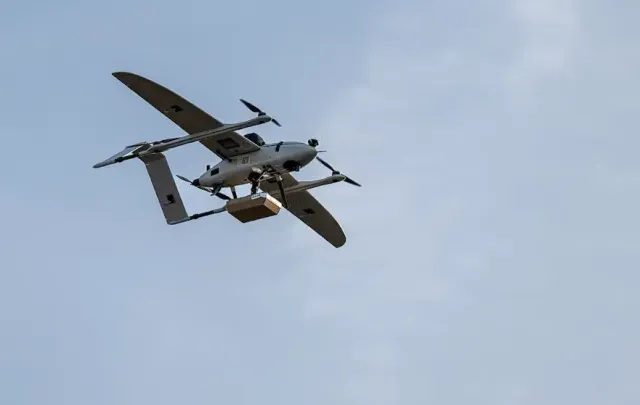
Aerial Care Corridors: Drone-Mediated Medical Logistics in Helsinki
Helsinki’s pilot project for drone-based medical supply transport explores how unmanned aerial vehicles can be woven into the city’s health logistics infrastructure. As reported in the DroneLife article you shared, the initiative tests beyond-visual-line-of-sight flights between healthcare facilities, transporting items such as laboratory samples and essential supplies. The project brings together municipal authorities, healthcare providers, aviation regulators, and drone technology firms to choreograph safe routes, integrate airspace management systems, and establish protocols for packing, tracking, and handing over medical consignments.
Beyond its immediate logistical function, the Helsinki drone pilot is a critical experiment in reconfiguring urban space, public services, and citizen expectations through automation. It materializes broader imaginaries of “smart cities” and “real-time” healthcare, translating them into concrete flight paths, data flows, and institutional routines. As such, the project provides a strong lens for examining how algorithmically governed mobility, platform logics, and emerging forms of datafied oversight become embedded in everyday infrastructures of care.
The Helsinki initiative dramatizes how medical logistics are being re-scripted as a socio-technical assemblage in which drones, sensors, routing algorithms, and regulatory frameworks co-produce what counts as timely, efficient, and safe care. Drone flights are not merely faster deliveries; they enact new spatial hierarchies (privileged aerial corridors above certain neighborhoods), redistribute risk (from ground traffic to aerial mishaps and data breaches), and create fresh dependencies on proprietary software and interoperable databases. This aligns with platformization dynamics, where public infrastructures increasingly hinge on private digital architectures and data standards. At the same time, the pilot foregrounds biopolitical stakes: medical samples and supplies become tokens within a regime of real-time triage and prioritization, governed by predictive analytics and service-level metrics. Questions of consent, transparency, and accountability arise when patient-related materials circulate through partially opaque, automated systems. Public perceptions of drones—ranging from excitement to anxiety—intersect with existing inequalities, as communities evaluate who benefits from accelerated care and who bears noise, surveillance, or safety burdens. Taken together, the case illustrates how “innovation” in health logistics operates as cultural production, reimagining what care looks like, where it happens, and who is visible to the system.
Practical Implications for Organizations
- Map logistics as a socio-cultural system, not only an efficiency problem; include public sentiment, professional routines, and neighborhood impacts in pilot design.
- Treat drone and automation projects as brand-signaling events: frame them in narratives of care, trust, and equity rather than pure technological prowess.
- Build strong data governance around medical logistics, specifying ownership, access rights, and secondary uses of flight, location, and consignment data.
- Co-design protocols with frontline workers, ensuring that automation augments rather than undermines professional judgment and existing care practices.
- Pilot in diverse routes and communities, measuring not only speed and cost but also perceived fairness, noise tolerance, and feelings of safety.
- Develop contingency plans for system failure, making clear to patients and staff how care continuity is guaranteed if drones or platforms go offline.
Consumer tribes that may relate to this case study:
 Eureka