AI ‘See-Through’ Billboards and the Algorithmic City: Google Gemini’s #BikinGebrakanLo in Indonesia
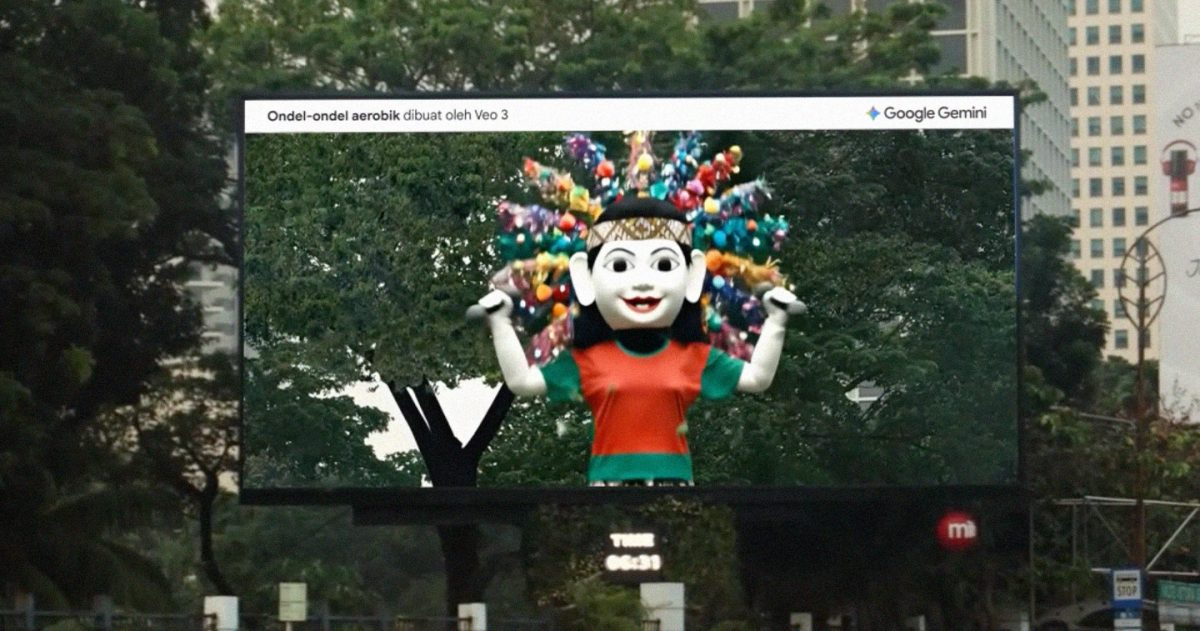
Google’s #BikinGebrakanLo campaign for Google Gemini introduces AI-powered “see-through” billboards in major Indonesian cities. Developed with Superson, DDB Singapore, and Hagia Labs, the digital out-of-home units use generative video models to simulate the real streetscape behind the screens, then overlay dynamic creative on top. To passing motorists and pedestrians, the boards appear almost transparent, synchronised with movement, lighting conditions, and local weather, producing the illusion that ads are seamlessly embedded into the existing environment rather than interrupting it.
Beyond technological spectacle, the campaign signals how AI, urban space, and platform capitalism converge in everyday visual culture. The billboards turn Jakarta, Surabaya, and Bandung into live testing grounds for predictive media, demonstrating how brands can algorithmically “read” and restage a city’s surfaces. Indonesia’s young, mobile-first population, already habituated to platform logics, becomes both the audience and the training substrate for new forms of datafied attention capture. This experiment in “ambient advertising” prefigures how AI may normalize continuous, adaptive branding as part of the urban sensorium.
The case exemplifies a shift from static messaging to responsive environments, where AI functions as an invisible cultural intermediary. These billboards do not just display content; they model, anticipate, and aestheticize the flow of traffic, sky, and architecture, aligning advertising with the rhythms of the city. In anthropological terms, such media remake public space as an interface, where distinctions between infrastructure, spectacle, and surveillance are blurred. The “see-through” metaphor operates semiotically as reassurance—advertising that claims not to obstruct—but materially it deepens Google’s infrastructural presence in Indonesian life, embedding a platform gaze into the streetscape.
At the level of consumer culture, the campaign extends influencer-style aesthetics into out-of-home media, promising personalized, cinematic views of familiar places. It rehearses a desirable future in which AI appears playful, useful, and culturally tuned, while masking asymmetries of power and data ownership. From a critical algorithm perspective, these billboards foreshadow cities where what is visible, valuable, and thinkable in public space is increasingly filtered through proprietary models that optimize for engagement and brand lift.
Practical Implications for Organizations
- Treat urban media as an adaptive interface: design OOH that responds to local light, weather, and movement rather than as fixed canvases.
- Use AI to simulate context early in creative development, prototyping how campaigns will feel within real streetscapes before deployment.
- Frame AI not as a back-end utility but as part of the experiential promise, while remaining transparent about data practices.
- Co-create with local cultural producers to ensure that hyper-real visuals resonate with situated urban identities and sensibilities.
- Anticipate regulatory and public concerns about visual pollution and surveillance; build governance, consent, and safety-by-design into OOH innovation.
- Experiment with “ambient” formats that minimize interruption yet still convey distinctive brand semiotics anchored in place.
Consumer tribes that may relate to this case study:
 Eureka