Feeling the Game: How OneCourt Redefines Inclusive Spectatorship Through Haptic Design
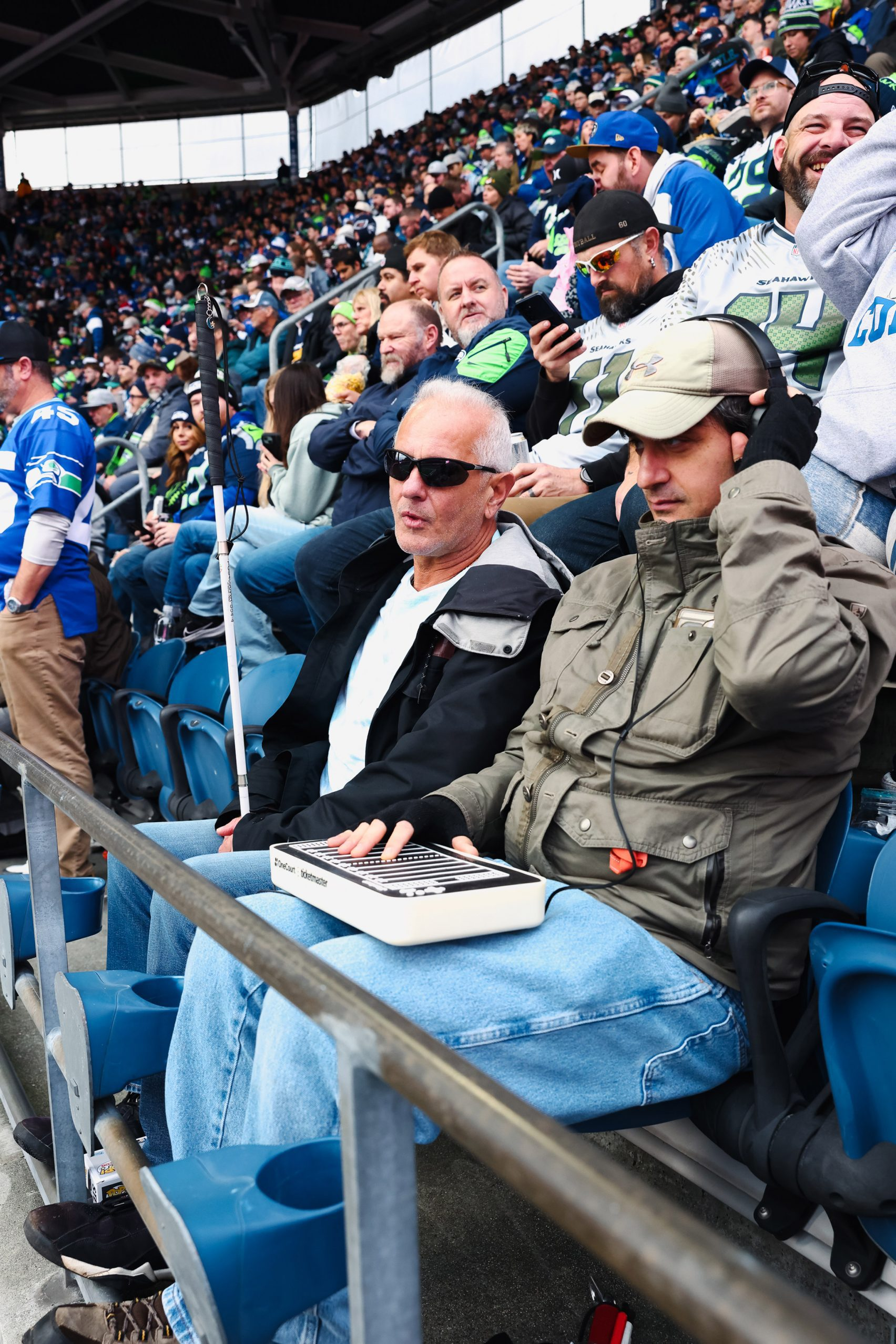
OneCourt is a Seattle-based startup founded by Jerred Mace, an Industrial Design and Entrepreneurship graduate from the University of Washington. Mace conceived the idea after watching a viral video of a sighted soccer fan guiding the hands of her blind friend over a tactile surface to convey match action. The resulting device, roughly the size of a thick iPad, features raised lines outlining a football field and translates real-time gameplay data into trackable vibrations and generative audio commentary. Powered by Microsoft Azure, the system processes live positional data from professional sports leagues and streams it to handheld displays, enabling blind and low-vision fans to follow ball movement, key plays, and spatial dynamics through their fingertips.
The significance of OneCourt extends well beyond assistive technology. By partnering with the NFL and Ticketmaster to deploy devices at the Super Bowl, the initiative signals a structural shift in how organizations conceptualize fan experience, equity, and the sensory architecture of live entertainment. It challenges the overwhelmingly ocularcentric logic of modern spectacle and repositions accessibility not as regulatory compliance but as a meaningful dimension of brand value and cultural participation.
OneCourt exemplifies what scholars in design anthropology describe as ethnography of the possible—a forward-looking, human-centered design practice that transforms existing conditions rather than merely documenting them. The device enacts a multisensory servicescape, disrupting the assumption that spectatorship is inherently visual. Drawing on the extended mind thesis, OneCourt functions as a cognitive prosthesis that does not replace perception but augments it, translating visual data into haptic and auditory modalities. This parallels insights from the study of top-down perceptual processing: just as prior knowledge restructures how sighted individuals perceive an image, the tactile broadcast restructures how blind fans comprehend gameplay, enabling genuine participatory experience rather than passive attendance. The collaboration between the NFL, Ticketmaster, and OneCourt further illustrates how co-creation with underserved user communities generates decolonized design outputs that serve broader audiences—sighted fans have also reported that the device enhances their real-time comprehension of the game.
Practical Implications for Organizations
- Treat accessibility as a source of innovation, not a cost center; inclusive design frequently yields solutions that enhance experiences for all users.
- Invest in multisensory touchpoints across servicescapes to reach audiences whose needs ocularcentric defaults overlook.
- Pursue co-creation with disability communities early in the design process to ensure authenticity and functional relevance.
- Leverage strategic partnerships—as the NFL did with OneCourt and Ticketmaster—to scale inclusive technologies rapidly within existing infrastructures.
- Embed equity metrics into fan-experience KPIs to track the organizational impact of accessibility initiatives beyond compliance.
Consumer tribes that may relate to this Eureka:
 Eureka