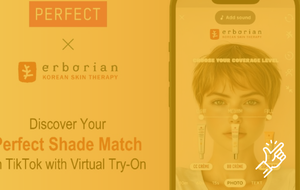
Erborian x Perfect Corp.: Algorithmic Beauty Encounters on TikTok
Erborian partnered with Perfect Corp. to embed real-time virtual try-on into TikTok for its “Find Your Match” launch of CC Crème, enabling users to toggle among light (CC Crème), medium (BB Crème), and full coverage (Super BB), while switching shades live and comparing before/after effects. The activation fused AR skin-matching with playful creator behaviors native to the platform, reframing complexion testing as an interactive social ritual. The updated CC Crème emphasized lightweight texture, luminous finish, and skincare benefits, leveraging the VTO to collapse the path from curiosity to choice.
This case exemplifies a shift from static product marketing to participatory, data-mediated trial in situ. By relocating shade discovery to the feed, the brand transformed algorithmic distribution into a co-creative consultation loop, increasing perceived personalization and lowering friction for shade selection. It also illustrates how social platforms function as retail interfaces where identity performance, recommendation, and conversion coalesce.
The campaign reconfigures authority in beauty from expert gatekeeping to collaborative sensemaking, with AR as a “prosthetic mirror” that translates product claims into embodied previews. VTO operates as a semiotic bridge linking ingredient discourse (skincare benefits, texture) to visible outcomes (coverage, luminosity) via credible self-visualization. On TikTok, the duet/remix grammar amplifies social proof as users display transformations, normalizing experimentation and producing vernacular reviews. The offer of graduated coverage options organizes the category along a pragmatic spectrum of play/purpose, addressing everyday utility while preserving aspirational performance.
Algorithmic curation shapes who sees which shades and narratives, potentially reinforcing beauty norms while promising inclusivity. The live switch between shades foregrounds choice architecture, inviting micro-calibrations of self-presentation that feel agentic. Yet, data collection and skin-tone detection implicate bias, transparency, and consent. The campaign thus sits at the nexus of affective commerce, computer vision, and identity work, where trust depends on accurate rendering, respectful data practices, and consistent semiotic cues across media.
Practical Implications for Organizations
- Treat social platforms as shoppable labs: deploy VTO to compress discovery, trial, and conversion in one scroll.
- Offer graduated performance tiers (light/medium/full) to map consumer needs onto clear, navigable choice architecture.
- Design VTO semantics: ensure lighting, tone mapping, and finish simulation match packaging and copy to avoid semiotic dissonance.
- Instrument creator-led demonstrations with standardized before/after rituals to scale credible, comparable evidence.
- Audit algorithmic reach for tone inclusivity; monitor shade engagement by cohort and recalibrate defaults to mitigate bias.
- Provide explicit data transparency and easy opt-outs; communicate how facial data and in-app behaviors are handled.
- Link VTO events to inventory and fulfillment to reduce mismatch between simulated and available shades.
- Use interaction telemetry (shade switches, dwell) to inform SKU rationalization, forecasting, and messaging.
Consumer tribes that may relate to this case study: