Royco

Unilever Indonesia, Royco, Seasoning, Nutrition, Cultural Branding, Government

Royco

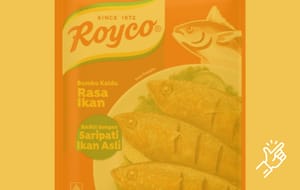
Royco Fish-Flavoured Seasoning: Semiotics of Nutrition, Nation, and Everyday Taste

Unilever Indonesia’s Royco fish-flavored seasoning is a branded response to the state-backed “Gemarikan” movement to increase fish consumption. The product is positioned as an everyday, affordable enhancer for home-cooked dishes, made with real fish essence and optimized for common Indonesian recipes. It translates a public health and food-security agenda—“eat more fish”—into a convenient sachet, inserted seamlessly into existing cooking habits rather than demanding radical behavioral change.

Beyond product innovation, this launch is significant as a cultural intervention in how nutrition, modernity, and national development are encoded in quotidian cooking practices. Royco becomes a semiotic bridge between governmental discourse, corporate purpose narratives, and the lived routines of largely female household cooks. In doing so, it illuminates how large FMCG brands enroll domestic labor into broader projects of national well-being and how “better eating” is reframed as a small, repeatable seasoning choice rather than a structural transformation of diets and food systems.

The case crystallizes how category codes in Indonesian flavoring—sachets, umami cues, and trusted “bumbu” brands—are repurposed to naturalize public health goals. By emphasizing “made with real fish essence,” Royco mobilizes the semiotic repertoire of Natural/Whole discourses within a Processed format: industrial production is visually and verbally tied to freshness, oceanic purity, and maternal care. This mitigates consumer skepticism toward processed foods while sustaining the convenience and price expectations of the seasoning category.

At the same time, the product embeds a particular model of citizenship: good Indonesians are those who support Gemarikan via their cooking, with mothers framed as the primary agents of nutritional patriotism. The seasoning sachet becomes a metonym of civic virtue—an easy, repeatable act that aligns the kitchen with state priorities. Yet this also displaces attention from power-laden issues like fisheries sustainability, regional inequalities in access to fresh fish, and the long-term implications of flavor-dependence on branded enhancers for children’s taste socialization.

Practical Implications for Organizations

  • Align functional innovation with policy discourse: map how state agendas (nutrition, sustainability, local sourcing) can be translated into concrete product benefits and packaging narratives.
  • Work with, not against, existing cooking repertoires: design extensions that plug into habitual dishes, utensils, and preparation sequences instead of demanding entirely new practices.
  • Calibrate semiotic codes: combine “processed convenience” codes (sachets, bold flavor imagery) with “natural integrity” cues (ingredient claims, origin stories, transparent visuals) to manage trust.
  • Frame consumers as partners, not targets: depict households as co-authors of social goals (health, national development), avoiding paternalistic or guilt-driven messaging.
  • Anticipate ethical critiques: integrate communications around responsible sourcing and fish-stock sustainability before activist or media narratives define the frame.
  • Use such launches as listening posts: analyze how different regions, classes, and genders appropriate or resist the product to refine future culturally embedded innovations.

Consumer tribes that may relate to this case study:

Conscious Fempreneurs
Consumer Tribe: Conscious Fempreneurs
Great! Next, complete checkout for full access to Antropomedia Express: Consumer Tribes.
Welcome back! You've successfully signed in.
You've successfully subscribed to Antropomedia Express: Consumer Tribes.
Success! Your account is fully activated, you now have access to all content.
Success! Your billing info has been updated.
Your billing was not updated.