Solaris’ Electric Bus Retrofit Service: Extending the Digital Life of Urban Mobility
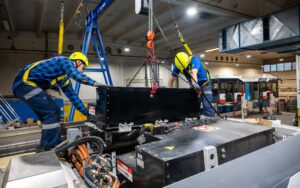
Solaris has introduced a “zero-emission vehicle retrofit” service that upgrades ageing electric buses by replacing depleted battery packs, renewing drivetrain components, and updating thermal and charging systems. Rather than decommissioning earlier-generation e-buses, operators can now return vehicles to Solaris for comprehensive technological renewal, increasing driving range, reliability, and passenger comfort while postponing costly fleet replacement. The service effectively treats the bus body and chassis as a long-lived shell whose digital heart—software-managed batteries, power electronics, and thermal systems—can be periodically renewed.
Beyond the technical dimension, this initiative is significant as a cultural intervention in how cities, operators, and passengers imagine the lifecycle of “green” mobility. Solaris reframes electric buses not as disposable symbols of environmental progress but as upgradable infrastructures embedded in circular economy logics. The retrofit program thus addresses the social contradictions of sustainable branding: it bridges the gap between visible eco-innovation at launch and the less visible, but politically salient, question of what happens as pioneering fleets age.
The service can be read as a semiotic repositioning of the electric bus from “new tech novelty” to “durable urban companion.” By privileging retrofit over replacement, Solaris encodes values of repairability, responsibility, and care for public assets. This shift responds to growing public awareness of e-waste, lithium extraction, and the carbon cost of manufacturing new vehicles. In consumer culture terms, the bus becomes a modular platform whose meaning is renewed through successive technological “updates,” mirroring the logic of smartphones and software rather than that of traditional heavy vehicles.
From a socio-technical perspective, the program redistributes power in the mobility ecosystem. Municipal operators gain leverage to maintain service levels without aligning to the aggressive product replacement cycles typical of automotive markets. At the same time, Solaris deepens lock-in by becoming long-term custodian of vehicles’ digital infrastructures, data histories, and algorithmic controls. The company converts its historical role as manufacturer into that of lifecycle partner, offering continuous optimization services rather than a one-off sale. This aligns with emerging models of “infrastructure-as-a-service,” where value is co-produced by manufacturer, operator, and city over time.
Practical Implications for Organizations
- Position retrofit and upgrading as core brand narratives that signal responsibility, not as marginal after-sales services.
- Build modular product architectures that anticipate multiple future retrofit cycles, both technically and communicatively.
- Develop service contracts that bundle hardware renewal with software, data analytics, and performance guarantees.
- Use retrofitted assets as flagship stories in ESG reporting, stressing circularity, waste reduction, and social value.
- Map stakeholder perceptions of “old” versus “upgraded” technology to design communication that normalizes visible ageing with invisible renewal.
- Treat lifecycle data from retrofits as strategic intelligence for product design, city partnerships, and policy influence.
Consumer tribes that may relate to this case study:
 Eureka