University of Maryland RoboScout Team

AI, Robotics, Emergency Response, Datafication, Governance, Drones

University of Maryland RoboScout Team

AI Robots and Drones in Emergency Response: Datafied Rescue Infrastructures

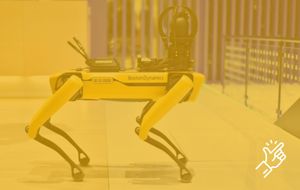
In this case, AI-trained drones scanned a simulated disaster zone to detect victims and beam precise geo-coordinates and condition data to “robot dogs” and human medics, allowing rapid triage and targeted intervention. The system combined aerial sensing, computer vision, and ground robotics into a coordinated, semi-autonomous response network. Rather than acting as isolated machines, drones and robots formed an integrated, data-centric assemblage that reconfigured how emergencies are seen, mapped, and acted upon.

Beyond technical innovation, the case signals a shift in how crisis, risk, and vulnerability are governed. Emergencies become sites of intensive data extraction where human bodies are rendered as streams of signals—heat signatures, movement patterns, biometric indicators—optimized for algorithmic sorting: who is most critical, where to allocate scarce resources, and what routes to prioritize. This datafication of disaster zones illustrates emerging forms of “seeing like a platform,” where territories and populations are reimagined as dynamic datasets for continuous optimization.

The triadic interaction between drones, robot dogs, and human responders exemplifies layered autonomy: humans remain nominally “in the loop,” yet key perceptual and classificatory work is delegated to AI systems. This redistributes authority over life-and-death decisions from embodied expertise and local knowledge toward predictive models trained on past scenarios. While this can accelerate response and expand sensory reach in hazardous spaces, it also embeds specific value hierarchies—what counts as “critical,” which bodies are detectable, which forms of distress are legible to sensors. These systems can thus reproduce existing social inequalities when training data reflect biased infrastructures, such as uneven historical investment in certain neighborhoods or populations.

At the same time, the case foregrounds sociotechnical interdependence: AI does not replace human rescuers but reconfigures their role as supervisors of algorithmic vision and executors of machine-prioritized plans. Trust, interpretability, and contestability become central—if human teams cannot understand or challenge AI-derived triage decisions, responsibility becomes blurred. Emergency response is recast as a continuous feedback loop between sensors, prediction models, and mobile robotic agents, embedding logics of optimization and surveillance into humanitarian practice.

Practical Implications for Organizations

  • Design multi-layered oversight so human responders can interrogate and override AI-driven triage and routing decisions in real time.
  • Audit training data and performance across demographic and spatial differences to prevent systematic under-detection or mis-prioritization of specific groups.
  • Treat crisis-data infrastructures as long-term governance systems, not one-off tools, with clear rules for retention, secondary use, and deletion of highly sensitive biometric and location data.
  • Invest in interface design that translates complex model outputs into explainable, operational cues for field teams under stress.
  • Build participatory protocols with local communities and emergency workers to align algorithmic priorities with situated notions of safety, dignity, and fairness.
  • Scenario-plan reputational risks around perceived “robo-humanitarianism,” ensuring narratives emphasize augmentation of human care rather than replacement.

Consumer tribes that may relate to this case study:

Moonshot Optimizers
Consumer Tribe: Moonshot Optimizers
Great! Next, complete checkout for full access to Antropomedia Express: Consumer Tribes.
Welcome back! You've successfully signed in.
You've successfully subscribed to Antropomedia Express: Consumer Tribes.
Success! Your account is fully activated, you now have access to all content.
Success! Your billing info has been updated.
Your billing was not updated.