AI Roadside Infrastructures: Tire Sensing, Risk Scoring, and the Datafication of Mobility
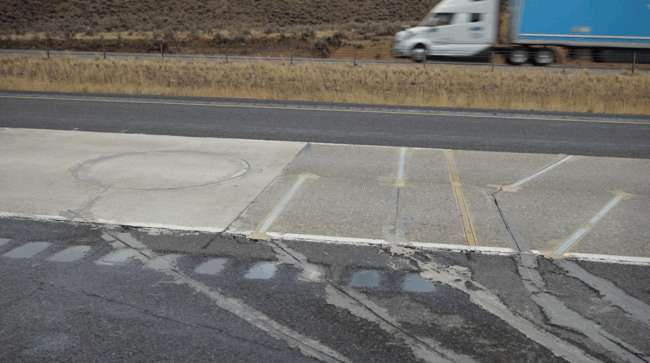
Utah’s transportation authorities have deployed an AI-based tire inspection system at several ports of entry, integrating roadway sensors, thermal cameras, and machine learning to evaluate truck tires as vehicles pass. The system detects anomalies such as flats, dual mismatches, and overheating, then issues alerts to enforcement officers and, in some cases, carriers. Rather than relying solely on manual inspections, Utah now folds continuous, machine-led observation into the governance of freight mobility, promising greater coverage, speed, and predictive capacity in identifying safety risks on the road.
Beyond a technical upgrade, the Utah AI tire system signals a broader reconfiguration of how mobility infrastructures “see” and act on traffic. It transforms a mundane component—tires—into a dense source of operational data, enabling authorities to classify trucks by inferred risk profiles and intervene selectively. In doing so, it exemplifies how AI-driven sensing infrastructures extend regulatory reach, alter relations between state agencies and logistics firms, and normalize the automation of safety judgements in everyday circulation.
This case illustrates the shift from episodic, sample-based inspection towards pervasive datafication of movement. The tire system operationalizes roads as sensing platforms and trucks as data-emitting entities, aligning with a paradigm where governance is executed through continuous scoring, ranking, and exception flagging. Safety ceases to be only a matter of explicit rule enforcement and becomes an optimization problem: algorithms allocate inspection attention based on historical and live signals, generating a stratified landscape of “high,” “medium,” or “low” risk traffic. Such differential visibility can reproduce inequalities between carriers, especially smaller operators with less capacity to instrument and document proactive maintenance.
The Utah deployment also exemplifies the opacity typical of AI-mediated classification. While officials frame the system as objective and efficient, the criteria by which a vehicle is flagged—choice of thresholds, weighting of historical patterns, handling of borderline measurements—remain largely inscrutable to drivers and fleet managers. This black-boxing narrows the space for contestation: once risk is algorithmically codified into a score or alert, human discretion tends to ratify rather than question the automated judgement. At the same time, the system subtly redefines professional expertise, recasting inspectors as operators supervising machine recommendations and repositioning carriers as data partners whose compliance is evaluated through continuous sensor-derived traces.
Practical Implications for Organizations
- Design AI safety tools as socio-technical systems: align models, thresholds, and interfaces with frontline professional judgement rather than replacing it.
- Build explainability into risk-scoring outputs so fleets and drivers understand why they are flagged and how to remediate.
- Anticipate data asymmetries: provide smaller carriers with dashboards and guidance so automated oversight does not systematically disadvantage them.
- Establish clear data governance: specify retention periods, secondary uses, and access rights for operational sensor data shared with public agencies.
- Treat infrastructure-generated alerts as inputs to collaborative safety programs with carriers, not solely as triggers for punitive enforcement.
- Continuously audit models for systematic bias across vehicle types, routes, and carrier profiles, and publish summary findings to sustain legitimacy.
Consumer tribes that may relate to this case study:
 Eureka