Healing at Altitude: China's Airborne Hospital and the Reinvention of Healthcare Accessibility
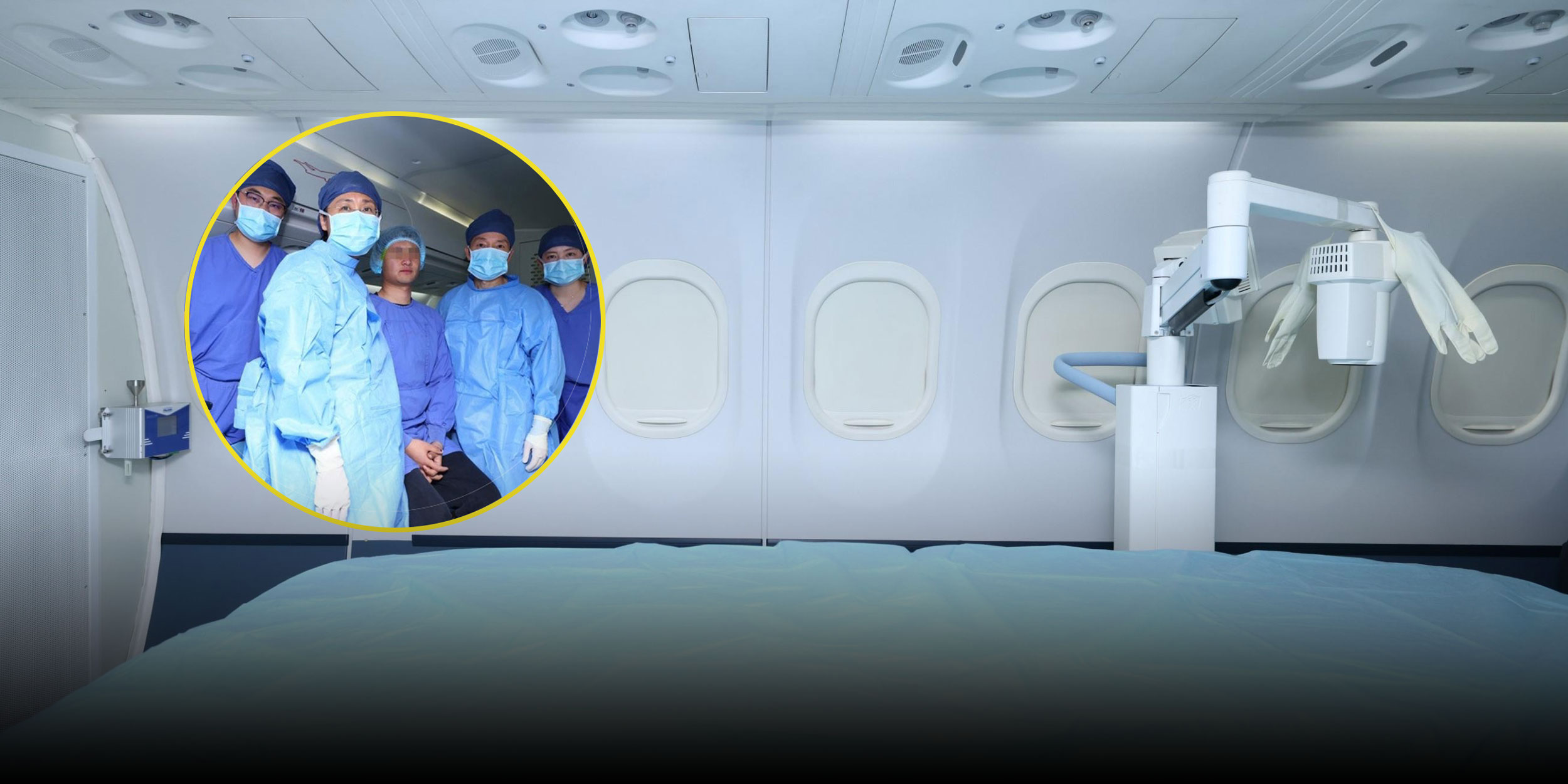
The Eye & ENT Hospital of Fudan University in Shanghai has inaugurated China's first licensed aircraft-based medical facility, converted from a domestically developed C909 regional jet. Approved by the Shanghai Municipal Health Commission, this airborne hospital delivers ophthalmic and ear, nose, and throat consultations, examinations, and surgeries to populations in geographically isolated regions. Integrated 5G connectivity enables real-time telemedicine, allowing Shanghai-based specialists to guide onboard clinical teams across thousands of miles. The initiative has already extended internationally, with medical missions conducted in Laos offering free screenings, surgeries, and training for local practitioners.
This case carries significance well beyond clinical innovation. It represents a convergence of national industrial strategy, digital infrastructure deployment, and humanitarian outreach. By embedding advanced medical capability within a domestically manufactured aircraft, the project simultaneously advances China's aviation sector, demonstrates 5G's practical utility, and addresses persistent inequities in healthcare distribution. It offers a compelling model for how states and institutions can mobilize technology to serve underserved communities rather than solely urban markets.
The airborne hospital exemplifies what scholars of organizational innovation term "institutional bricolage"—the creative recombination of existing resources to address structural gaps. Healthcare systems worldwide suffer from spatial inequality, where specialist services concentrate in metropolitan centers while peripheral populations face chronic undersupply. The C909 initiative disrupts this pattern through radical mobility, transforming the hospital from a fixed institution into a deployable platform. From a semiotic perspective, the aircraft-as-hospital functions as a powerful signifier of state care and technological sovereignty, reinforcing narratives of national capability. The integration of 5G telemedicine further destabilizes the traditional center-periphery model of expertise, enabling distributed knowledge exchange. However, critical scrutiny is warranted: sustainability depends on continued investment, scalability across diverse terrains, and the avoidance of performative humanitarianism that prioritizes symbolic impact over lasting systemic reform.
Practical Implications for Organizations
- Deploy mobile service infrastructures to reach underserved segments rather than relying solely on fixed-location delivery models.
- Leverage connectivity technologies such as 5G to distribute specialist expertise across geographies in real time.
- Integrate brand narrative with tangible social impact , ensuring that innovation efforts communicate organizational values authentically.
- Design pilot programs with scalability in mind , building evidence from initial deployments to justify broader institutional investment.
- Pursue cross-sector partnerships combining industrial, technological, and healthcare competencies to maximize resource utilization.
Consumer tribes that may relate to this Eureka:
 Eureka