
Doppl and the Algorithmic Wardrobe: Google's AI-Driven Reimagining of Fashion Discovery
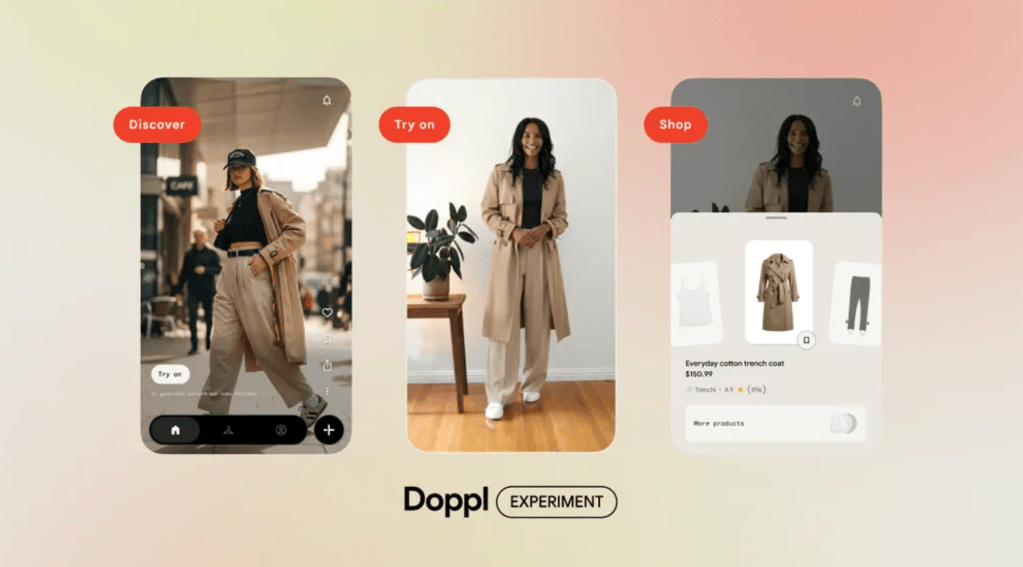
Google's Doppl represents a significant development in artificial intelligence-enabled retail innovation. Emerging from Google Labs as an experimental application, Doppl allows users to upload full-body photographs and virtually try on clothing through generative AI visualization. The platform synthesizes outfit recommendations, generates realistic renderings of garments on users' bodies, and provides direct shopping links to retailers. Recognition by TIME Magazine as one of the "Best Inventions" signals its perceived cultural and commercial relevance.
The broader significance of Doppl lies in its fusion of personalization algorithms, visual simulation, and e-commerce infrastructure. This convergence transforms passive browsing into an immersive, predictive shopping experience, fundamentally reshaping how consumers encounter and evaluate fashion products.
Doppl exemplifies the transition from representational to predictive media within consumer culture. Rather than merely displaying products, the application synthesizes new visual artifacts—images of users wearing garments that do not yet exist in their wardrobes. This predictive visualization aligns with broader shifts in generative AI, where systems trained on vast datasets learn to anticipate and materialize consumer desires. The personalized discovery feed embodies algorithmic curation logic, positioning taste as something extractable, modelable, and ultimately reproducible through machine learning. From a semiotic perspective, clothing becomes doubly encoded: first as a cultural sign of identity and aspiration, and second as data input for AI-driven recommendation engines. The platform risks fostering aesthetic echo chambers, where users encounter only algorithmically validated styles, potentially homogenizing visual culture while reinforcing existing preferences rather than expanding stylistic horizons. Furthermore, Doppl raises questions about the authenticity of self-presentation when mediated through synthetic imagery, blurring boundaries between aspirational identity and algorithmic suggestion.
Practical Implications for Organizations
- Invest in generative AI capabilities that bridge discovery and transaction, reducing friction between inspiration and purchase.
- Recognize that hyper-personalization may inadvertently narrow consumer exposure; consider introducing mechanisms for serendipitous discovery.
- Anticipate regulatory and ethical scrutiny regarding synthetic imagery, data collection, and consumer consent in AI-mediated retail.
- Leverage virtual try-on technologies to reduce return rates and enhance sustainable consumption practices.
- Monitor for aesthetic convergence effects that may dilute brand differentiation across platforms relying on similar algorithmic logics.
Consumer tribes that may relate to this Eureka:
 Eureka