Thailand’s Bangkok Drone Delivery Pilot: Building a Platform for the Urban Sky
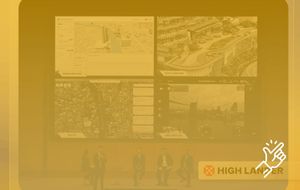
Thailand’s national drone delivery pilot in Bangkok marked a pivotal experiment in orchestrating dense, low-altitude airspace as shared infrastructure. Centered on High Lander’s Vega UTM platform, integrated with NT’s 5G network and overseen by CAAT, the showcase demonstrated dozens of coordinated flights transporting medical, agricultural, and consumer goods across a complex urban environment. Real-time telemetry, automated deconfliction, and networked supervision served as proof-of-concept for an emerging “digital control room” of the city’s sky.
Beyond technical performance, the pilot instantiated a proto-ecosystem: a state-backed, telecom-powered, privately coded infrastructure that aspires to become the default conduit for unmanned aviation. By demonstrating that 5G-linked UTM can safely coordinate multiple operators and missions, Thailand positions itself to scale drone services nationally, from logistics and health to agriculture and disaster response.
The Bangkok experiment illustrates how airspace is being reimagined as a programmable, datafied layer of the city. Vega UTM operates as a kind of digital twin of the low-altitude environment, fusing live positional data, flight plans, and regulatory constraints into a continuously updated model. This model enables algorithmic governance of drones—where rules, permissions, and risk thresholds are encoded in software rather than managed case by case. The pilot thus exemplifies a shift from traditional air traffic control to platform-based algorithmic regulation, with NT’s 5G infrastructure providing the backbone for real-time, automated oversight.
At the same time, the project signals the emergence of “airspace-as-a-platform,” in which a small number of public–private actors mediate access, visibility, and value extraction across the drone ecosystem. Such arrangements can foster innovation and safety, but they also introduce risks of control creep, spatial sorting of services, and dependencies on proprietary systems for critical public functions. The social legitimacy of this infrastructure will hinge on how issues of transparency, data governance, public accountability, and equitable access are addressed as the system scales beyond a showcase into an everyday, normalized layer of urban life.
Practical Implications for Organizations
- Design drone initiatives as socio-technical systems: integrate regulatory, infrastructural, and community dimensions from the outset, not only flight performance.
- Treat UTM and connectivity providers as strategic partners: co-develop governance rules, data-sharing agreements, and contingency protocols, rather than outsourcing them.
- Build explicit guardrails against control creep: define and communicate strict limits on secondary uses of flight, location, and customer data.
- Use pilots to prototype governance, not just technology: test consent models, complaint mechanisms, and public communication strategies alongside operational metrics.
- Plan for ecosystem formation: create clear participation standards, APIs, and certification pathways so multiple operators can plug into the same airspace platform.
- Align brand narratives with public value: frame drone services around safety, inclusion, and service improvement to build trust in visibly data-intensive infrastructures.
Consumer tribes that may relate to this case study: