BOSS, Vision, Velocity: Spatial Retail as High-Performance Culture
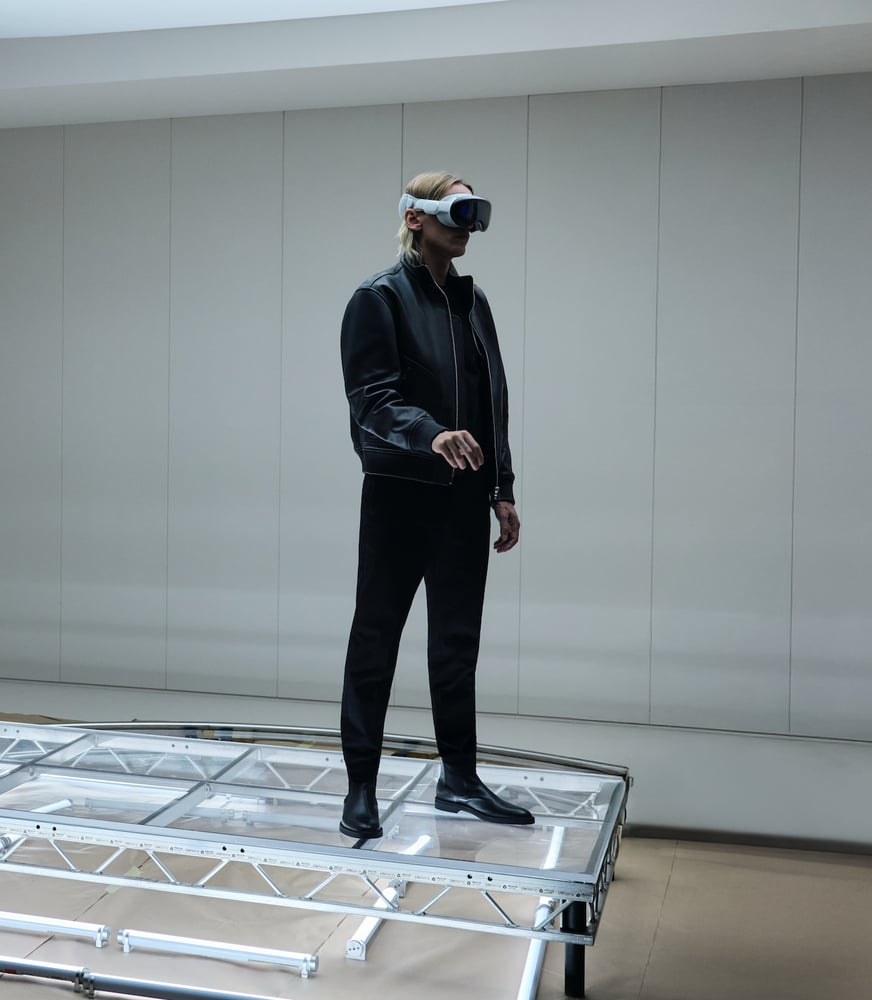
Hugo Boss introduced an immersive Formula 1 experience inside its Regent Street flagship, developed with the Aston Martin Aramco Formula One Team and designed by EPAM Systems using Apple Vision Pro. The in-store spatial journey guides visitors through sequential tasks—3D puzzles, visual targeting drills, and a virtual Test Lap accompanied by the roar of the AMR25—framed by interactions with Fernando Alonso and Lance Stroll. The initiative acknowledges that fewer than 1% of fans attend races in person and extends the spectacle of motorsport into everyday retail.
Beyond a one-off activation, the experience functions as a scalable blueprint, set to roll out in Paris, Düsseldorf, Barcelona, Las Vegas, Dubai, and Singapore. It repositions the store from transactional venue to participatory media stage, blurring boundaries between showroom, theme park, and broadcast studio. In doing so, BOSS leverages fandom infrastructures to translate elite performance codes into accessible, embodied encounters.
This case exemplifies a shift from proscenium retail to hybrid servicescapes that interweave physical design with e-scapes. Spatial computing dissolves the service counter into moving touchpoints, amplifying consumer agency through task-based progression and sensory immersion. The activation uses brand semiotics of accuracy, speed, and control: ritualized drills shape the driver's cognitive schema, turning goals into small skills that can be practiced. By embedding celebrity presence as co-performers rather than distant icons, the brand converts spectatorship into co-creation, enhancing identification and narrative transportation. The partnership creates a blend of fashion style and racing data—making tailoring part of performance engineering—so that beauty and technical skill come together. Such scripting converts a luxury fashion environment into a carnival-circus hybrid where rules loosen enough for play, yet remain bounded by elite codes that preserve exclusivity. Measurably, the format invites new metrics—dwell time, task completion, bio-behavioral engagement—shifting value from footfall to performance-based attention. Finally, geographic expansion repurposes flagship stores as nodes in a distributed, repeatable storyline, creating continuity across cities while allowing local calibration.
Practical Implications for Organizations
- Recast flagships as spatial media labs: integrate AR/VR layers that turn category myths into embodied tasks and progression loops.
- Design for agency, not just awe: combine short, skill-based challenges with sensory cues to deepen memory encoding and repeat visitation.
- Embed celebrity as interactive guidance: use pre-scripted exchanges to shift ambassadors from endorsement to co-performance.
- Instrument the experience: track dwell time, stage drop-off, and task success to optimize flows and predict conversion.
- Translate brand metaphor into mechanics: map core values (precision, control, speed) to specific actions users perform in the space.
- Build a traveling format: standardize the core narrative while localizing cultural details; treat each store as an episode in a transcity arc.
- Align merchandizing with moments: place products at post-challenge “cool-down” zones to convert arousal into purchase.
- Prepare staff as dramaturgs: train teams to facilitate, troubleshoot, and narrate, sustaining immersion without friction.
Consumer tribes that may relate to this case study:
 Eureka
 Eureka
 Eureka