
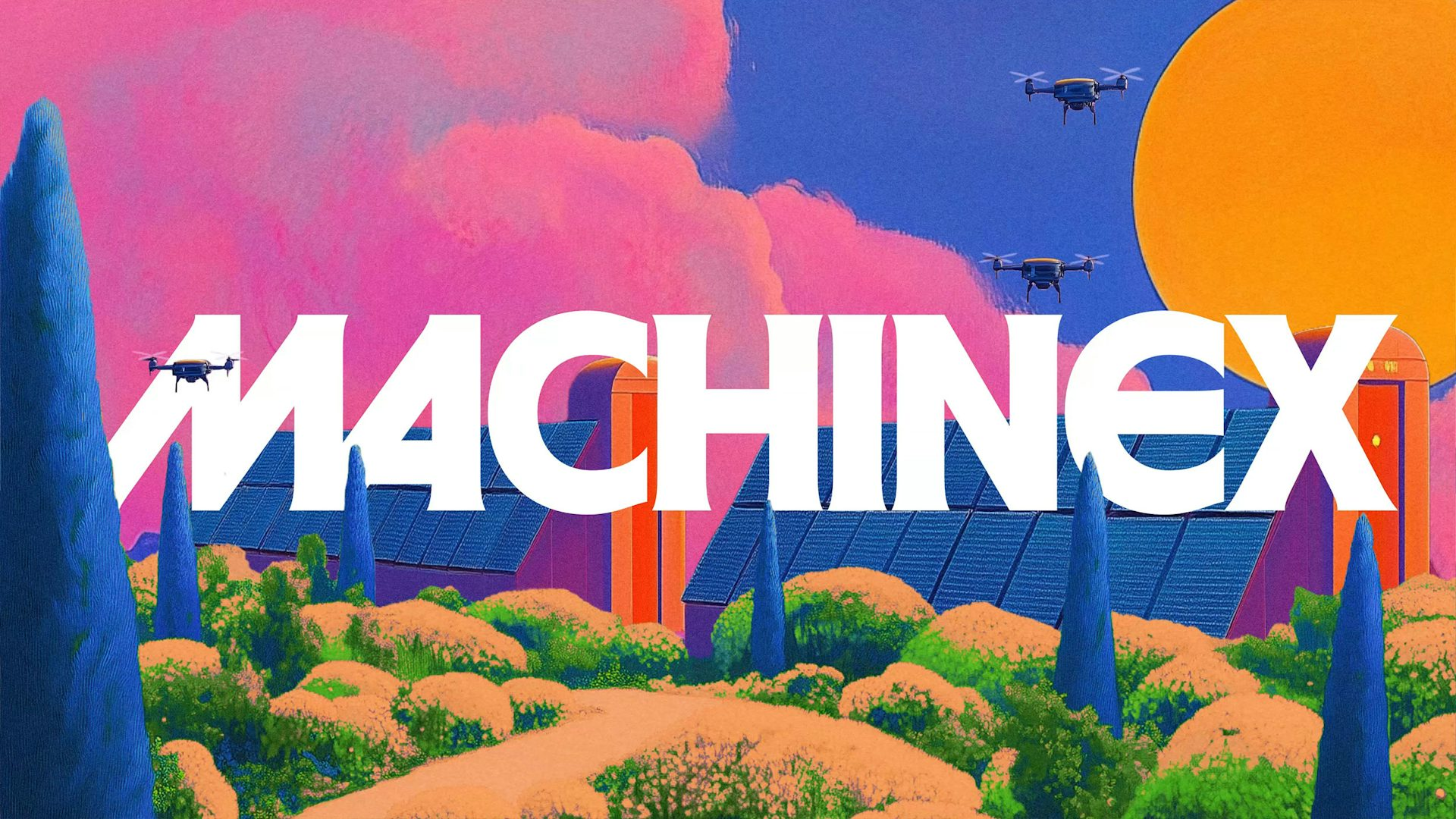
Koto's Retro-Futurist Brand Identity for MachineX
MachineX is a decentralized exchange built on Peaq blockchain technology, operating as a peer-to-peer marketplace where humans and machines trade utility tokens, energy, space, and time within what is termed the Machine Economy. Global creative studio Koto, based in Berlin, developed a comprehensive brand evolution guided by the concept "Human x Machine." The identity system includes a sculptural wordmark, a screen-optimized color palette, custom typography, illustration, dynamic motion design, and a robot mascot named Dexter who serves as the brand's emotional anchor.
The significance of this case extends well beyond visual design. MachineX operates in a nascent category—autonomous machine-to-machine commerce—that most consumers find abstract and inaccessible. By grounding an emerging technological paradigm in character-driven storytelling and retro-futurist aesthetics drawn from Star Wars and Isaac Asimov, Koto demonstrates how brand semiotics can render the unfamiliar legible and culturally resonant, transforming infrastructure into narrative.
The identity leverages archetypal worldbuilding to bridge the gap between technical complexity and human emotion. Dexter functions as a mythic mediator, translating an opaque economic system into a recognisable character who socialises, trades, and inhabits illustrated scenes. This strategy draws on the psychological function of myth: offering audiences familiar narrative structures through which to process novel realities. The "Human x Machine" framing operates not as a tagline but as a cultural code—a semiotic north star structuring every touchpoint. Koto's approach reflects a sophisticated understanding of brand sign systems, where meaning emerges from the interplay between cultural codes, category conventions, and proprietary symbols. In a category devoid of established visual grammar, Koto effectively authored the category code itself. The retro-futurist aesthetic is a deliberate rhetorical choice, deploying nostalgia to domesticate futures that might otherwise provoke anxiety. Illustrations of robots in everyday social contexts perform a metonymic function, collapsing the distance between autonomous machines and lived human experience. This worldbuilding strategy mirrors how entertainment franchises construct coherent universes that invite participation rather than passive consumption.
Practical Implications for Organizations
- Invest in worldbuilding rather than isolated visual assets when launching brands in emergent, unfamiliar categories.
- Deploy character-driven design to humanize abstract or technical value propositions and lower cognitive barriers to adoption.
- Treat brand concepts as cultural codes rather than slogans, ensuring they structure every design and communication decision consistently.
- Author category-level visual conventions early to establish semiotic authority before competitors define the space.
- Use nostalgic or archetypal aesthetics strategically to make speculative technologies emotionally accessible to broad audiences.
- Prioritize screen-native color and motion systems when the primary brand environment is digital.
Consumer tribes that may relate to this Eureka:
 Eureka