
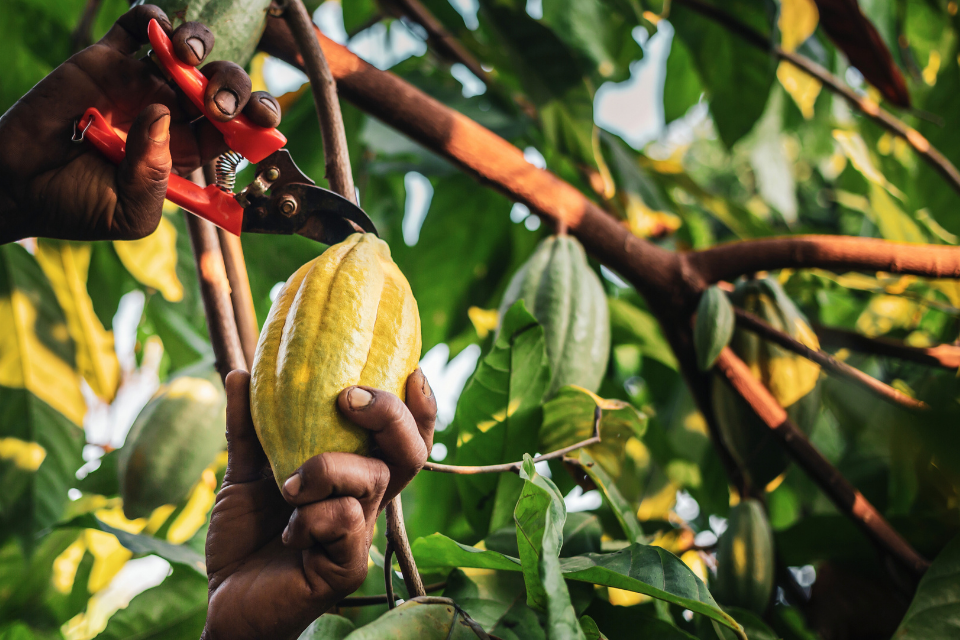
Cacao Futures Under the Scalpel: Mars, Pairwise, and the Semiotics of Climate-Resilient Chocolate
Mars has entered a licensing agreement with Pairwise to apply the Fulcrum CRISPR platform—including the SHARC enzyme—to cacao R&D. The collaboration aims to accelerate trait discovery and precision editing to develop cacao plants with higher resilience to disease, climate variability, and environmental stressors. By enabling trait activation, deactivation, and fine-tuning, the partnership seeks to shorten breeding cycles and fortify supply chains while claiming transparency and responsibility in development and communication.
This case signals a pivotal shift in how global food brands reframe agricultural risk: from exogenous climate shocks to endogenous, platform-mediated innovation. It exemplifies how agri-biotech infrastructures increasingly function as strategic assets in brand value chains, reconfiguring roles across growers, scientists, and corporate stewards, and reframing “sustainability” as both a technical remedy and a symbolic guarantee to anxious consumers and investors.
The partnership illustrates the platformization of plant science, where biology APIs are modularized into edit libraries, enzymes, and decision tools. In cultural terms, cacao becomes a programmable substrate: a locus where meanings of nature, heritage, and indulgence collide with optimization logics. Brand semiotics shifts from terroir and smallholder authenticity to resilience-by-design, inviting questions about how edits travel through certification regimes, geographic indications, and consumer expectations of “real chocolate.” Socio-technical imaginaries are mobilized: CRISPR is cast as stewardship rather than domination, aligning corporate responsibility with algorithmic precision. Yet governance gradients persist: data asymmetries and IP consolidation centralize agency, potentially marginalizing producer communities and narrowing biodiversity through trait convergence. Consumer psychology suggests ambivalence: edited foods can trigger purity norms but also reassurance when framed as risk mitigation for beloved categories. Organizationally, the solution is risk hedging through technological affordances, translating climate volatility into controllable pipeline metrics. The moral economy of supply chains may hinge on co-management with growers, transparent traceability, and credible oversight that distinguishes editing from transgenics while addressing equity in benefit-sharing.
Practical Implications for Organizations
- Build a narrative architecture: pair technical transparency (what traits, why, how) with emotive stewardship cues that protect the category meanings of cacao.
- Design consentful supply chains: implement participatory governance with growers, including data-sharing protocols, benefit-sharing, and local variety preservation.
- Segment communication: differentiate B2B (resilience, yield stability) from consumer-facing frames (quality, farmer livelihoods, climate adaptation), and pre-test for purity concerns.
- De-risk certification: co-create guidance with standard-setters on gene-edited traits; maintain parallel non-edited lines to preserve market optionality.
- Hedge biodiversity risk: adopt portfolio breeding to avoid trait monocultures; monitor ecological impacts and publish stewardship dashboards.
- Align with digital traceability: integrate edit provenance into blockchain or equivalent systems to enable selective disclosure and recall agility.
Consumer tribes that may relate to this Eureka:
 Eureka
 Eureka