McDonaldland Rebooted: AR Nostalgia as Platformed Brand World
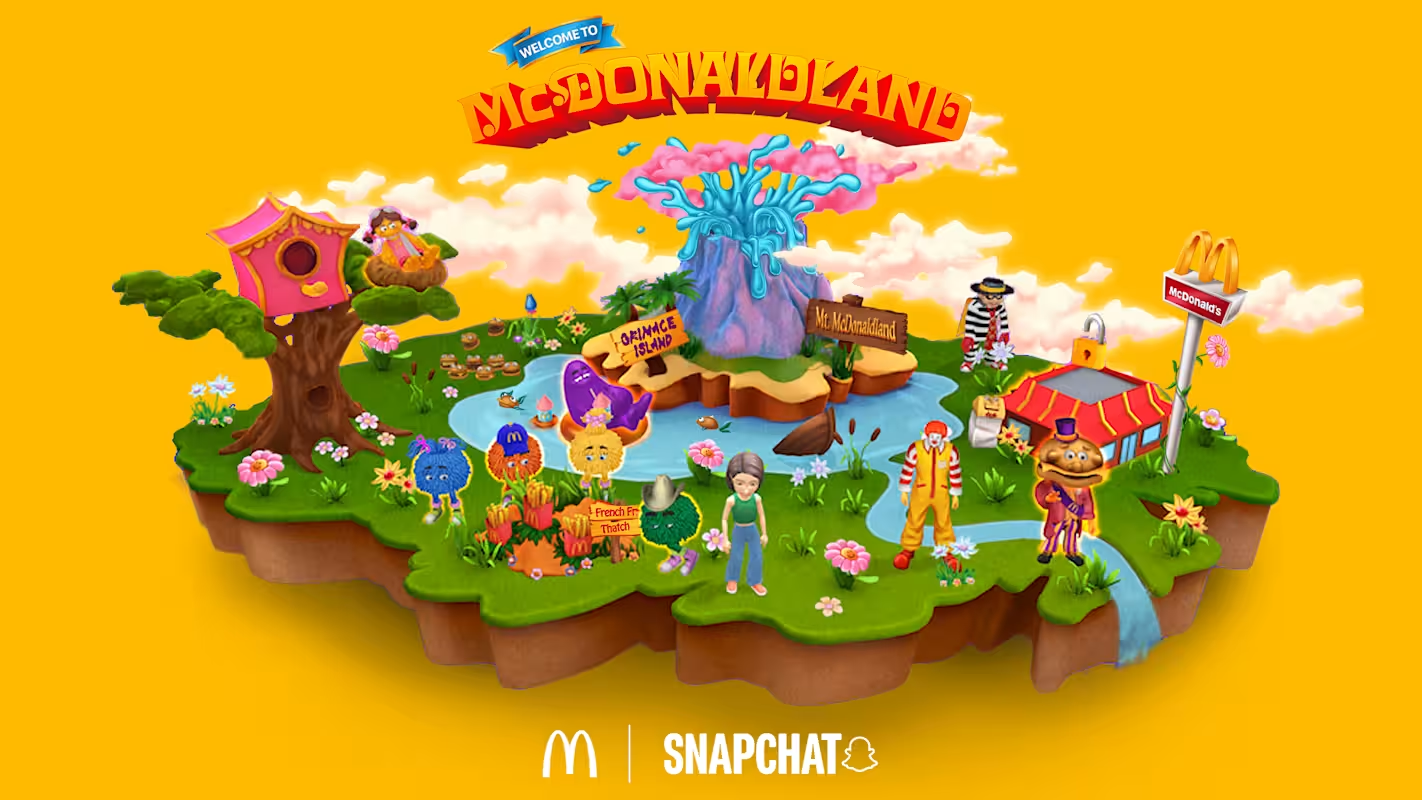
McDonald’s partnered with Snapchat to revive McDonaldland as an augmented reality environment that fuses Bitmoji embodiment, geo-fenced lenses, and mini-games. The activation centers on the McDonaldland Map Lens, where users navigate a 3D map with iconic characters, and an in-restaurant Step Into McDonaldland experience that overlays the physical site. Gamified mechanics—Grimace Island Dash, Fry Frenzy, Birdie’s Dream Flight—extend into a scannable souvenir linked to a special McDonaldland Meal, unlocking additional content and tightening loops between play, purchase, and social sharing.
The significance lies in how the campaign translates legacy brand mythos into a living, participatory world that spans e-scapes and servicescapes. It operationalizes nostalgia not as memory but as interaction, orchestrating continuity between media, stores, and meals. By converting restaurants into stages for AR play and the meal into a tokenized gateway, the brand anchors its cultural memory in everyday touchpoints, increasing dwell time, word-of-mouth, and data-rich engagement.
This activation illustrates platformized cultural branding, where the brand metaphor is made explorable and performative. Nostalgic semiotic assets—characters, colors, and shapes—are recontextualized through playful spatial metaphors that collapse the distance between the consumer and the brand world. The servicescape gains a heterotopic layer as visitors oscillate attention between physical interiors and AR overlays, generating hybrid presence and co-creation. Gamification recodes routine consumption into episodic quests, producing micro-status rewards and repeat visitation. The integration of a scannable souvenir and themed meal links symbolic value with transactional triggers, closing the loop from narrative to conversion. Social avatars function as identity anchors within the branded world, enabling parasocial play that scales peer visibility. Algorithmic personalization via Bitmoji and location targeting enhances perceived intimacy while normalizing data exchange. The campaign reframes advertising as an ongoing hypertext: each interaction unlocks new nodes that feed back into content, encouraging recursive participation and network effects.
Practical Implications for Organizations
- Treat legacy IP as a spatial system: translate archives into navigable AR worlds with clear progression paths and unlockables.
- Fuse e-scapes with servicescapes: use geo-fenced lenses to transform stores into stages, aligning lighting, signage, and staff scripts with the AR storyline.
- Close the play-to-purchase loop: bind physical SKUs or meals to scannable souvenirs that gate premium content and rewards.
- Design for avatar-led identity: enable users’ digital selves to co-star with brand characters; prioritize shareable moments that signal group belonging.
- Orchestrate episodic cadence: rotate mini-games, seasonal quests, and limited lenses to sustain return frequency and narrative freshness.
- Instrument consented data value: make personalization benefits legible; offer clear controls and transparent rewards for participation.
- Measure service semiotics: audit for message-experience alignment across ads, AR, and in-store cues to prevent meaning dissonance.
- Co-create with platforms: leverage native studios and toolkits to optimize performance, discoverability, and safety.
Consumer tribes that may relate to this case study:
 Eureka