
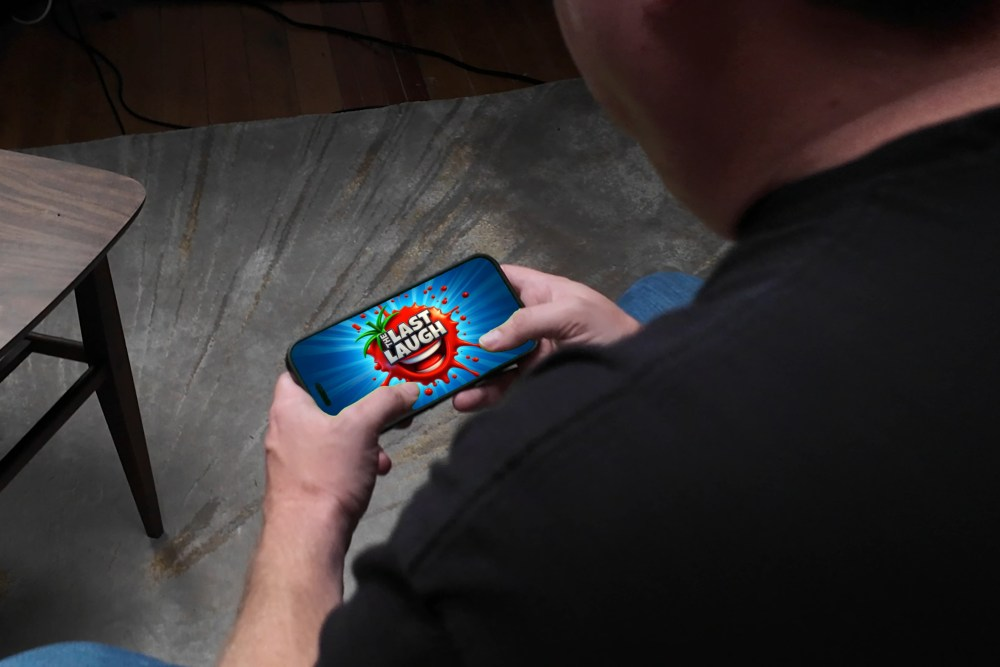
Soapstone’s “The Last Laugh”: Comedy, Algorithms, and Social Play in VR
The Soapstone Comedy Club’s release of “The Last Laugh” in Meta Horizon presents a mobile-first, social VR game that turns stand-up comedy into an interactive, gamified experience. Players enter a virtual club where they can perform, vote, and co-create shows, blending live participation with game mechanics that reward wit, timing, and crowd engagement. Built within Meta Horizon Worlds, the experience leverages avatars, proximity audio, and user-generated performances to simulate the affective density of a comedy club, but with low barriers to entry and algorithmically mediated social discovery.
This case is significant because it reframes comedy as a participatory, data-driven cultural form rather than a one-to-many broadcast product. “The Last Laugh” functions simultaneously as a social venue, content factory, and behavioral data engine, illustrating how platformized humor cultures and immersive environments converge. It showcases how emerging metaverse infrastructures can translate long-standing entertainment genres—here, stand-up comedy—into persistent, co-created worlds that blur lines between audience and performer, amateur and professional, and content and play.
The experience operationalizes core dynamics of digital culture: prosumption, gamification, and algorithmic curation. Users are invited to “be the brand” of Soapstone Comedy Club by embodying comedic personae through avatars and voice performance, while metrics such as laughter, votes, and repeat visits become both reputation capital and signals for internal optimization. Humor operates as a key cultural code, anchoring trust, intimacy, and distinction in an otherwise abstract, datafied environment. The platform enacts a form of cultural intermediation: it curates which performers, routines, and styles of humor gain visibility, thereby structuring the symbolic economy of what counts as “funny” within Meta Horizon. At the same time, the space highlights ambivalences of algorithmic conviviality: intensified inclusion for some, potential exclusion or harassment for others, and a continual negotiation of norms around satire, offense, and safety. As a hybrid of nightclub, game, and social network, “The Last Laugh” exemplifies how branded spaces in VR do not just host culture; they actively program, measure, and recompose it in real time.
Practical Implications for Organizations
- Design immersive experiences as social laboratories where audiences co-create content, not just consume it.
- Treat humor and play as strategic semiotic resources for building brand intimacy in virtual and mixed-reality spaces.
- Build feedback loops that translate in-world interaction metrics into rapid iteration of features, formats, and event design.
- Establish explicit governance for moderation, safety, and acceptable humor boundaries to protect vulnerable participants.
- Use avatar-based participation to prototype new forms of identity expression, fandom, and loyalty programs.
- Partner with platforms to ensure data transparency and co-ownership of insights generated by user performances.
Consumer tribes that may relate to this case study:
 Eureka