Aerial Retail Infrastructures: Walmart’s Drone-Based Last Mile in Atlanta
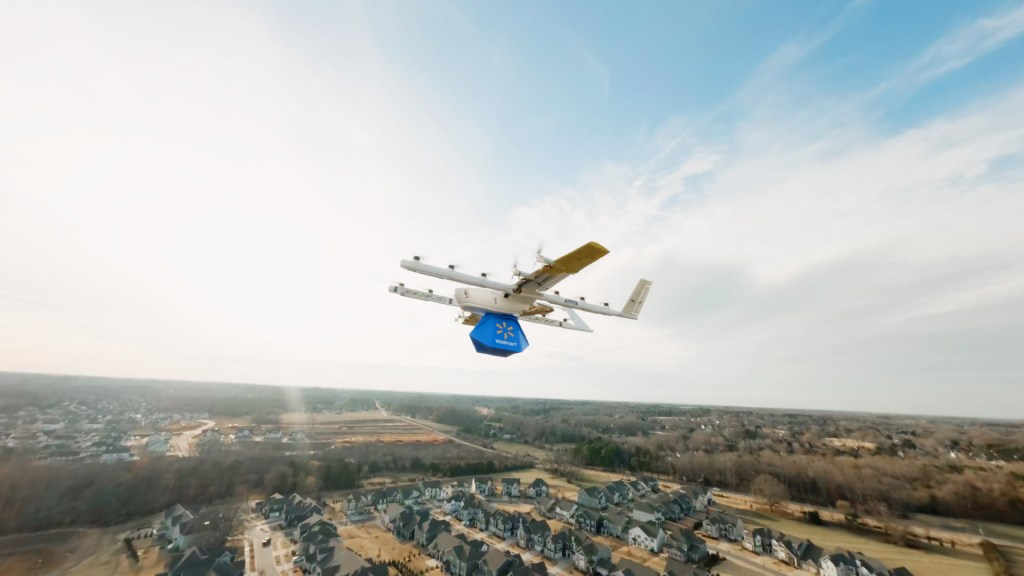
Since early in the initiative, customers in parts of Atlanta have been able to receive online orders via drones departing from selected Walmart locations. The trial, in partnership with specialist provider Wing, promises delivery times of just a few minutes for a curated assortment of groceries, household items, toys, and over‑the‑counter medicines. Drones operate from store‑adjacent “nests,” integrating with Walmart’s ordering systems and local inventory to perform hyperlocal, low‑weight deliveries within a defined radius around participating stores.
Beyond logistics experimentation, the Atlanta trial is a testbed for reimagining suburban and metropolitan space as three‑dimensional retail corridors. By moving last‑mile fulfillment into the air, Walmart extends its servicescape vertically, transforming car‑centric parking lots and rooftops into logistical hubs. The case crystallizes broader shifts in digital consumer culture, where on‑demand convenience, algorithmic orchestration, and automation reshape how households access everyday goods and how retailers materially inhabit neighborhoods.
The Atlanta dronescape can be read as a socio‑technical assemblage in which consumers, algorithms, airspace regulations, and local ecologies are tightly coupled. Last‑mile drone delivery converts the promise of frictionless online shopping into a visible aerial spectacle, re‑inscribing brand presence into the sensory environment through sound, movement, and speed. From a consumer culture perspective, “instantaneity” becomes a key symbolic resource: delivery time itself is commodified and differentiated, constructing hierarchies between those included within the service radius and those left in slower, ground‑based channels.
Digitally, the system intensifies datafication of everyday life. Each drone flight is the surface expression of background processes of demand forecasting, geo‑segmentation, and route optimization. Neighborhoods are not only served but also classified and valued according to order density, risk profiles, and infrastructural suitability. This produces a new layer of algorithmic urbanism in which airspace above certain communities is commercialized, while others remain logistically peripheral. Simultaneously, drone delivery recodes environmental and ethical debates: it is framed as lower‑emission and decongesting, yet it externalizes noise, surveillance anxieties, and labor displacement from drivers to machines, reconfiguring what “service work” means in retail.
Practical Implications for Organizations
- Treat airspace as an emerging retail servicescape: design drone programs as part of brand experience, not only logistics optimization.
- Map inclusion and exclusion effects: audit who is inside the drone radius and mitigate reputational risks of creating “premium” and “neglected” zones.
- Integrate drone analytics into broader data governance: clarify how flight, location, and household data are collected, combined, and communicated.
- Prototype human–automation hybridity: re-skill in‑store and driver staff into monitoring, customer care, and exception management roles.
- Engage municipalities early: co‑design noise, safety, and privacy protocols to avoid backlash and secure stable regulatory conditions.
- Experiment with new value propositions: bundle ultra‑fast delivery with memberships, health, or emergency‑use services to move beyond mere speed.
Consumer tribes that may relate to this case study:
 Eureka