
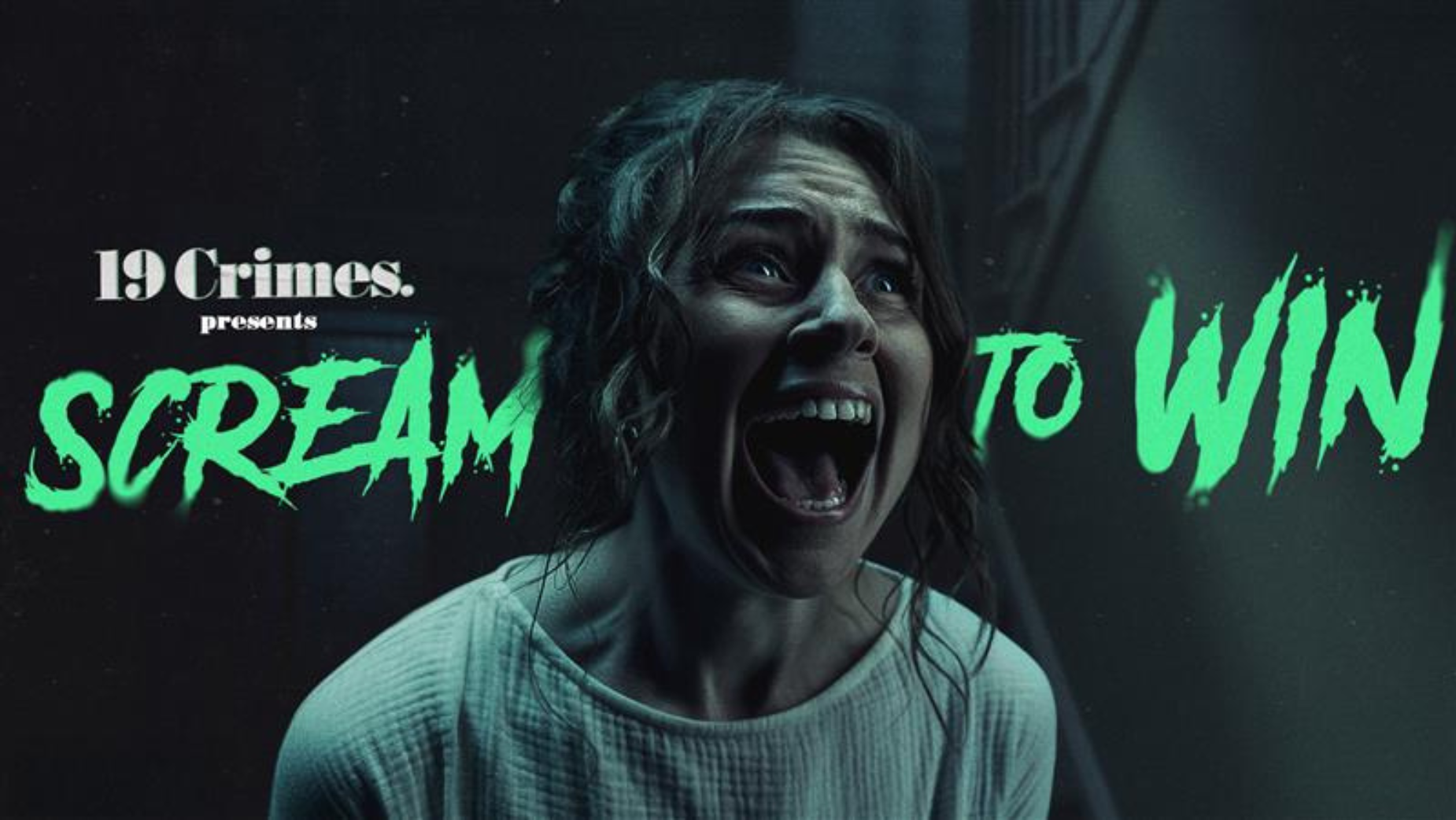
Sonic Spectacle: 19 Crimes Turns Horror Fandom into Participatory Brand Theatre
19 Crimes’ Scream to Win is a participatory activation that recruits Australian consumers as co-performers in the brand’s Halloween-led universe. Developed by TWE X Splash with execution by Mango Communications, the campaign centers on a public scream booth in Melbourne and a companion microsite for at-home entries. The prize—two days as an extra on an Australian horror set with travel and accommodation—extends the activation from street-level spectacle to the film production field, while limited-edition Universal Monsters bottles with glow-in-the-dark labels synchronize product, story world, and seasonal ritual.
Beyond a stunt, the initiative folds retail, experiential, and social amplification into a cohesive hypertext linking wine purchasing, horror fandom, and performative expression. Media and community partners, including Mindshare, Milkman, and Social Soup, help circulate the spectacle and aggregate user performances, converting an FMCG promotion into a culture-forward participation frame that travels across online and offline spaces.
At its core, the campaign operationalizes brand semiotics through metaphor, metonymy, and ritualization. The scream booth transforms voice into a symbolic currency of fandom, metonymically standing for courage, transgression, and play—codes congruent with 19 Crimes’ outlaw persona. Universal Monsters deliver an intertextual bridge between classic horror mythologies and contemporary wine consumption, with glow-in-the-dark labels producing a sensorial cue that literalizes nocturnal, liminal atmospheres. The prize architecture performs aspirational contagion: proximity to filmmaking promises status mobility and narrative ingress, encouraging identity signaling via recorded screams. The campaign exemplifies prosumption: consumers generate content and intensify the brand’s myth through embodied action. Algorithmic circulation via social channels renders screams into shareable micro-performances, where intensity, humor, and spectacle compete in attention markets. The seasonal calendar functions as a cultural affordance, lowering participation thresholds and legitimizing playful deviance in public space. Importantly, the activation also hedges against category inertia by reframing wine—often coded as refined and static—into kinetic, communal theater. This dissonance refreshes category meaning while preserving the brand’s rebellious equity.
Practical Implications for Organizations
- Design participatory rituals that convert brand values into embodied acts; make the “entry mechanic” itself the shareable asset.
- Use licensed mythologies to scaffold instant world-building; ensure semiotic fit with existing brand codes.
- Engineer multi-sited hypertexts: synchronize retail packaging, live activations, and microsites to create continuous narrative pathways.
- Offer status-adjacent rewards (e.g., access to production sets) to drive earned media and identity signaling beyond monetary incentives.
- Integrate low-friction at-home participation to scale reach while preserving the aura of the physical spectacle.
- Instrument metrics around performance intensity, share rate, and cross-channel pathing to optimize for cultural resonance, not only conversions.
- Leverage sensory design (e.g., glow effects, sound capture) to create memory cues that persist post-campaign in domestic settings.
Consumer tribes that may relate to this case study:
 Eureka
 Eureka