
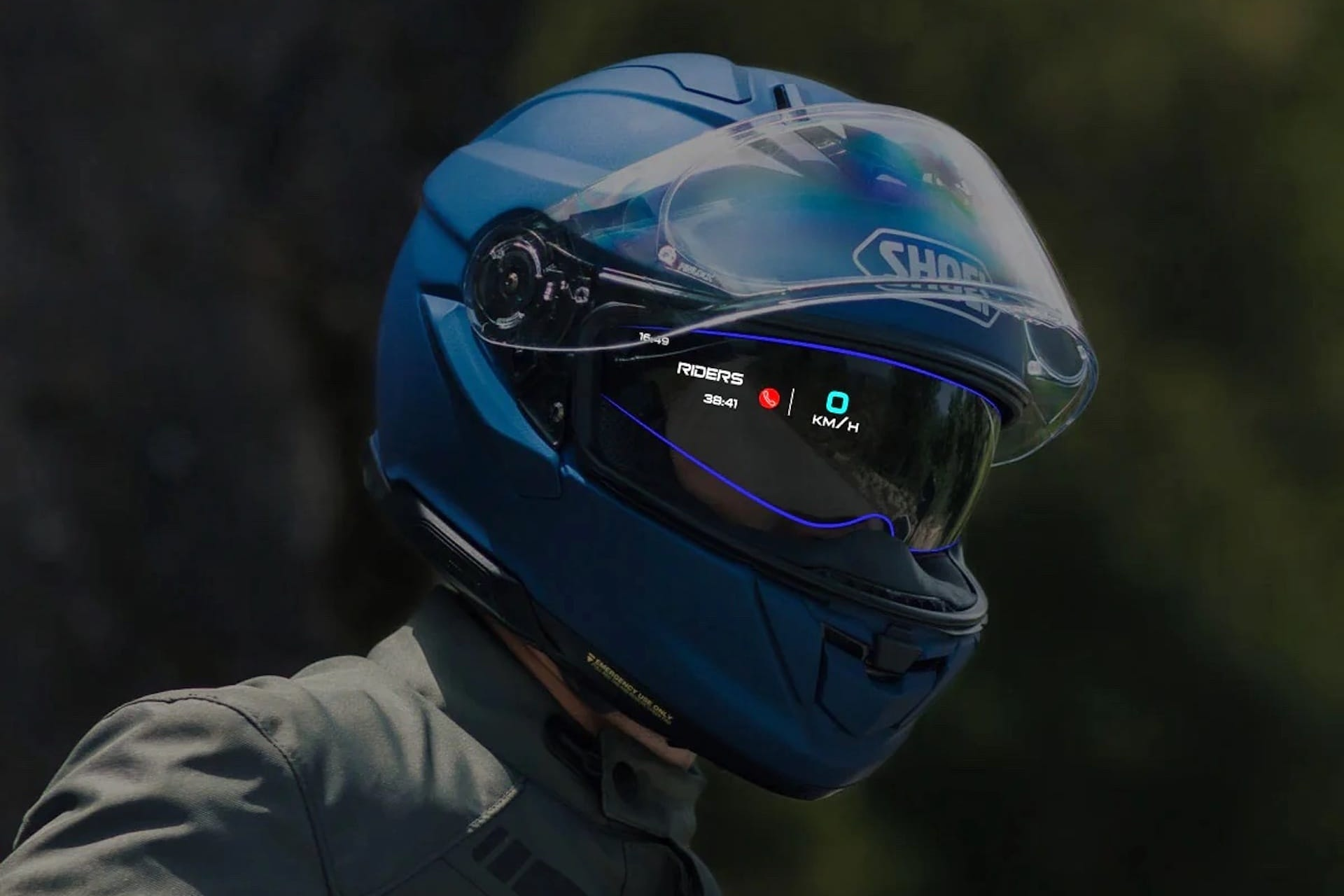
Augmented Vision: Shoei and EyeLights Redefine Motorcycle Helmet Design Through Integrated AR Technology
The Shoei GT-Air 3 Smart helmet represents a significant advancement in wearable technology for motorcyclists, emerging from a partnership between Japanese helmet manufacturer Shoei and French augmented reality firm EyeLights. Marketed as the world's first motorcycle helmet with a fully integrated augmented reality head-up display, the device utilizes third-generation nano OLED technology to project navigation data, speed readings, incoming calls, and radar alerts directly into the rider's field of vision. Priced at $1,199, the helmet also incorporates a premium audio system, positioning itself at the intersection of safety equipment and digital interface design.
The broader significance of this development lies in its demonstration of how embedded digital technologies are reshaping the material culture of everyday objects. Rather than requiring external devices or retrofitted accessories, the GT-Air 3 Smart integrates augmented reality into an object traditionally valued for its protective function, signaling a shift toward seamless human-machine interfaces in high-stakes environments.
This case exemplifies the ongoing convergence between embodied human experience and computational mediation. The helmet functions as an interface layer, positioning digital information within the rider's perceptual field without demanding explicit attentional shifts. This aligns with broader trajectories in ubiquitous computing, where technology recedes into the background of lived experience. From a semiotic perspective, the product transforms the helmet from a purely protective artifact into a sign of technological sophistication and connectivity, appealing to identity constructions around innovation and early adoption. The collaboration between a legacy Japanese brand and a French tech firm also reflects hybrid brand architectures where heritage credibility merges with startup agility to produce novel consumer propositions. However, this integration raises questions about perceptual load and distraction, echoing debates in critical algorithm studies regarding how mediated information environments shape attention and decision-making.
Practical Implications for Organizations
- Embed technology invisibly: Integrate digital capabilities into existing product forms rather than creating standalone devices, reducing friction in user adoption.
- Leverage strategic partnerships: Combine established brand equity with emerging technology expertise to accelerate innovation credibility.
- Prioritize contextual relevance: Deliver information precisely where and when users need it, minimizing cognitive burden.
- Anticipate regulatory scrutiny: Proactively address safety and distraction concerns inherent in attention-mediating technologies.
- Design for embodied use: Consider how physical context shapes technology interaction, particularly in high-risk environments.
Consumer tribes that may relate to this Eureka:
 Eureka
 Eureka