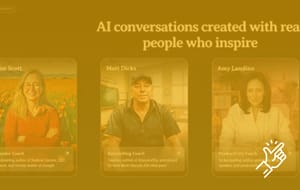
YouTube’s experiment involves AI chatbots modeled on popular creators’ personas, designed to live inside channels as always-on guides. These bots can answer questions, recommend videos, and participate in live chats, effectively extending a creator’s presence across time zones and interaction formats. The initiative parallels similar experiments by other platforms, positioning these AI agents as new intermediaries between audiences, creators, and platform algorithms. Early tests suggest they will be tightly integrated with YouTube’s data infrastructure, learning from historical content, comments, and engagement patterns to simulate the style, voice, and “attitude” of specific creators.
This development is significant because it transforms the creator from an individual content producer into a programmable interface. The “creator brand” becomes a modular asset: it can be instantiated as video, short-form content, merchandise, and now as a conversational agent. In doing so, YouTube further blurs boundaries between human authenticity, algorithmic curation, and synthetic personhood. The platform’s power is deepened not only in recommending content but in orchestrating affective relationships between viewers and AI-mediated versions of creators.
The case crystallizes several dynamics in digital culture and consumer behavior. First, it extends parasocial interaction into what can be called “synthetic parasociality”: the illusion of reciprocal, co-present conversation with a figure whose responses are machine-generated but affectively coded as personal. Second, it elevates the platform’s role as a meta-producer of subjectivities: YouTube does not just distribute creator brands; it technically re-authors them as chatbots. This raises questions of data ownership, consent, and symbolic labor, as the creator’s style, speech patterns, and community lore become a trainable resource that can be monetized and, in theory, replicated or substituted.
From a consumer culture theory perspective, the chatbot becomes a new “brand contact zone,” where meaning is co-produced through micro-interactions that are logged, analyzed, and fed back into recommendation architectures. The AI creator-bot is both an actor in the brand assemblage and a probe that continuously tests viewers’ preferences, emotional triggers, and attention thresholds. Semiotic consistency—voice, tone, visual avatar—will be crucial, as any dissonance between the human creator and their AI double risks uncanny valley effects and trust erosion. At the same time, some viewers may prefer the AI version, which is more responsive, more available, and less encumbered by human limits, potentially destabilizing the hierarchy between “real” and synthetic creators on the platform.
Practical Implications for Organizations
- Treat AI personas as strategic brand assets: define boundaries of voice, values, and permissible scripts before deploying creator-like chatbots.
- Negotiate data and persona rights explicitly with talent; anticipate scenarios where platform-owned replicas compete with or outlive human creators.
- Design for transparency gradients: decide when and how to signal that users are engaging with an AI while preserving immersion and usability.
- Use chatbot interactions as a live ethnographic sensor: mine conversational logs for emergent needs, cultural references, and friction points in the customer journey.
- Prototype governance protocols for error, bias, and misrepresentation, including escalation paths from AI to human support.
- Explore cross-channel extensions: the same branded persona could anchor experiences across YouTube, brand sites, and messaging apps, but must be semiotically coherent.
Consumer tribes that may relate to this case study: